
WASHINGTON, DC (WGNS) - Federal lawmakers took decisive action late Tuesday (September 15th) to protect free local broadcast radio, overwhelmingly passing the AM Radio for Every Vehicle Act by a voice vote on the House floor.
The legislation (H.R.979) requires the Secretary of Transportation, working alongside the Federal Emergency Management Agency (FEMA) and the Federal Communications Commission (FCC), to issue a mandatory rule within one year. That rule will mandate AM radio reception as standard equipment in all new passenger vehicles sold in the United States without any additional fees. Manufacturers can comply using traditional receivers or equipment capable of receiving digital audio AM stations.
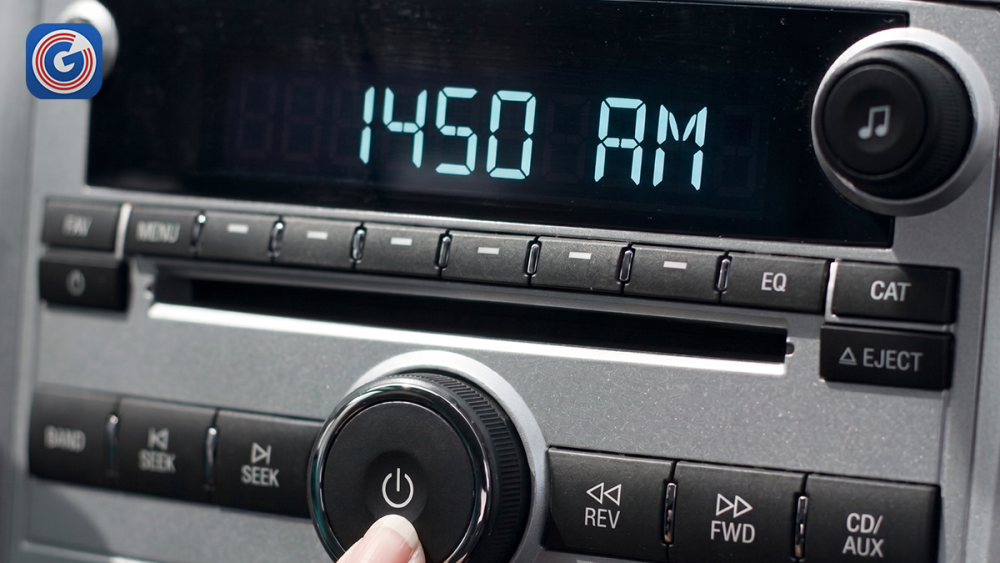
Supporters emphasized that AM radio remains a vital lifeline during severe weather and local crises, serving as a primary backbone for the Integrated Public Alert and Warning System (IPAWS). Recent data reveals that 82 million Americans tune in to AM radio for news, sports, weather, and life-saving alerts. Here, WGNS has been serving Rutherford County listeners on AM 1450 continuously since 1947.
The bill secured backing from more than 125 prominent groups, including the National Emergency Management Association, the American Farm Bureau Federation, AARP, Native Public Media, SAG-AFTRA, and the National Association of Black Owned Broadcasters. It also received support from Tennessee Republican House members.
Before final implementation, the Department of Transportation (DOT) must submit a report to Congress analyzing any potential effects AM reception could have on automated driving systems and how automakers can resolve those issues. Automakers generally receive up to two years to comply after the final rule is issued, while small-volume vehicle manufacturers that produced 40,000 or fewer U.S. vehicles in 2022 will get four years. Any vehicles sold without AM capability during the transition period must carry clear warning labels.
The measure also directs the Government Accountability Office (GAO) to study emergency alerting efficiency, specifically evaluating whether alternative communication technologies can guarantee the President can reach 90% of the public during a national crisis. The legislation features an eight-year sunset provision following enactment.
The bill now moves to the Senate, where a matching proposal cleared committee in February 2025. With 61 Senators already signed on as cosponsors, the bill holds enough votes to defeat any potential filibuster and advance to the President's desk.