
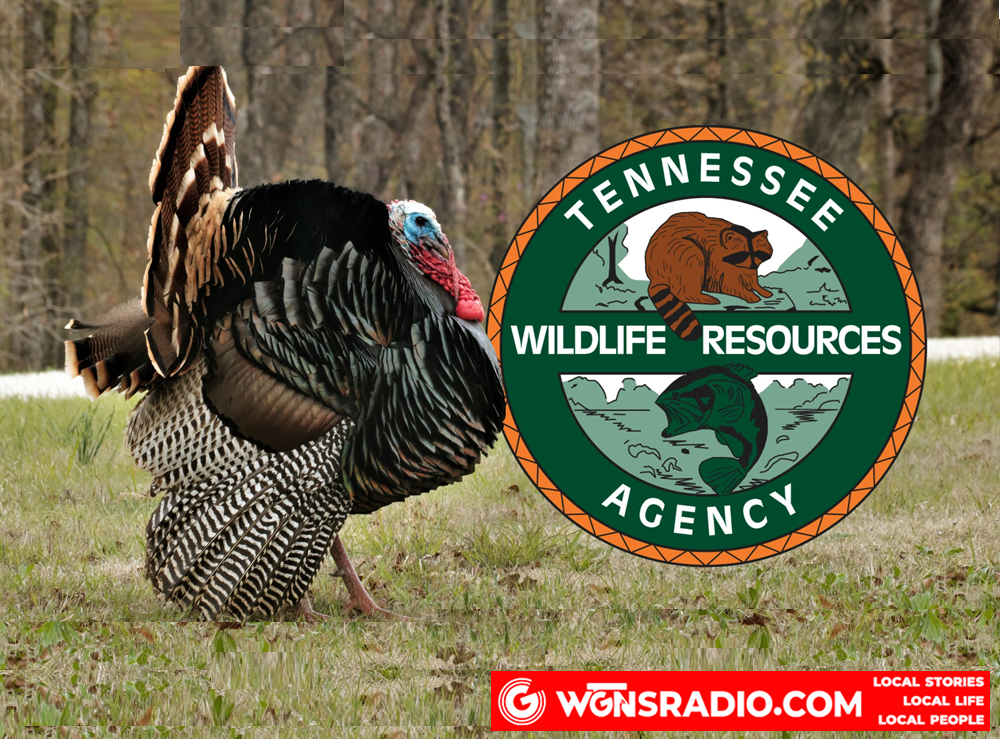
RUTHERFORD COUNTY, TN (WGNS News) - You don’t have to drive far in Rutherford County before you spot a rafter of wild turkeys wandering a field edge or slipping across a back road. And according to new conservation funding decisions, Tennessee leaders want to keep it that way.
The Tennessee State Chapter of the National Wild Turkey Federation has wrapped up its review of the 2026 Hunting Heritage Super Fund proposals, approving a slate of projects aimed at strengthening turkey habitat, research, and public access across the state. The board signed off on $209,199 for conservation work, $25,607 for research, $176,250 for access projects, and another $71,085 for hunting heritage efforts like education programs and chapter scholarships. Those dollars go a long way, too — NWTF says the conservation awards will be matched by more than $28 million in partner and grant funding.
All of this comes at a time when Tennessee’s turkey population has been under closer watch. Statewide numbers have been trending downward since around 2013, based on long‑term monitoring through the North American Breeding Bird Survey and TWRA harvest data. Some of the steepest declines have hit counties farther south, including Giles, Lawrence, and Wayne, where harvest totals dropped by nearly 60 percent between 2005 and 2015.
Rutherford County, though, sits in a more encouraging zone. Counties just to the north — Bedford and Maury — have remained stable or even seen slight increases, and Rutherford continues to track alongside them. TWRA’s annual status reports show Middle Tennessee still producing strong spring harvest numbers, and Rutherford consistently contributes to that trend.
Tennessee’s turkey hunting seasons span both spring and fall, giving hunters two distinct windows to get into the woods: the 2026 spring season opens with the Young Sportsman Weekend on April 4–5, followed by the regular statewide season from April 11 through May 24, while the 2025 fall seasons include archery from Sept. 27–Oct. 24 and Oct. 27–Nov. 7, along with a shorter shotgun/archery window from Oct. 11–24; spring offers the broader opportunity with a two‑bird seasonal limit (one per day, only one jake), while fall is more limited with a single male turkey allowed for the entire season, and although some Tennessee counties close during fall, Rutherford County remains open for both, keeping local hunters well‑positioned for year‑round participation.
One final bit of information to Rutherford County residents. Turkeys will feed along road edges where gravel, seeds, or leftover crops are easy to find, and they sometimes fly low across rural roads. Flocks can also linger on warm pavement on cold mornings. Most turkey‑vehicle collisions happen when a driver rounds a curve and encounters a group in the roadway, or when a bird flushes suddenly and flies into a windshield.
Local hunters say they’re still seeing plenty of birds, and the data backs them up. While turkey numbers can fluctuate from year to year, there’s no sign that Rutherford County is experiencing the sharper declines seen elsewhere. For now, at least, the county remains one of Tennessee’s reliable turkey habitat strongholds.