UPDATED: MIDDLE TENNESSEE (WGNS) - Federal health officials are investigating a seasonal increase in cyclosporiasis, a gastrointestinal illness caused by a microscopic parasite that can contaminate food or water.

As of July 9, 2026, the Centers for Disease Control and Prevention had received reports of 843 confirmed, domestically acquired cases across 31 states. At least 86 patients were hospitalized, but no deaths had been reported.
Tennessee was listed among the affected states, with between 11 and 30 confirmed illnesses. Neighboring Kentucky and North Carolina each reported between 31 and 80 cases (See CDC Map Here).
The CDC said the national figures include people who became sick after eating or drinking something in the United States and who did not report international travel during the 14 days before their symptoms began.
The number of confirmed cases is expected to grow. In addition to the 843 cases already included in the federal surveillance count, the CDC was reviewing more than 1,500 additional reports to determine whether the illnesses meet the definition of domestically acquired cyclosporiasis.
Health officials also caution that CDC figures may trail state totals because of the time required to investigate, classify and report each illness. The agency does not include probable cases in its national count.
Those who became ill ranged in age from 5 to 88, with a median age of 44. Approximately 59% were female. Illnesses began between May 1 and July 5, with a median onset date of June 18.
Multiple states reported more infections during the two weeks preceding the July 9 update than during the same period in 2025. Because federal officials estimate that approximately six weeks may pass between the onset of an illness and its inclusion in CDC data, the full scope of the increase may not yet be known.

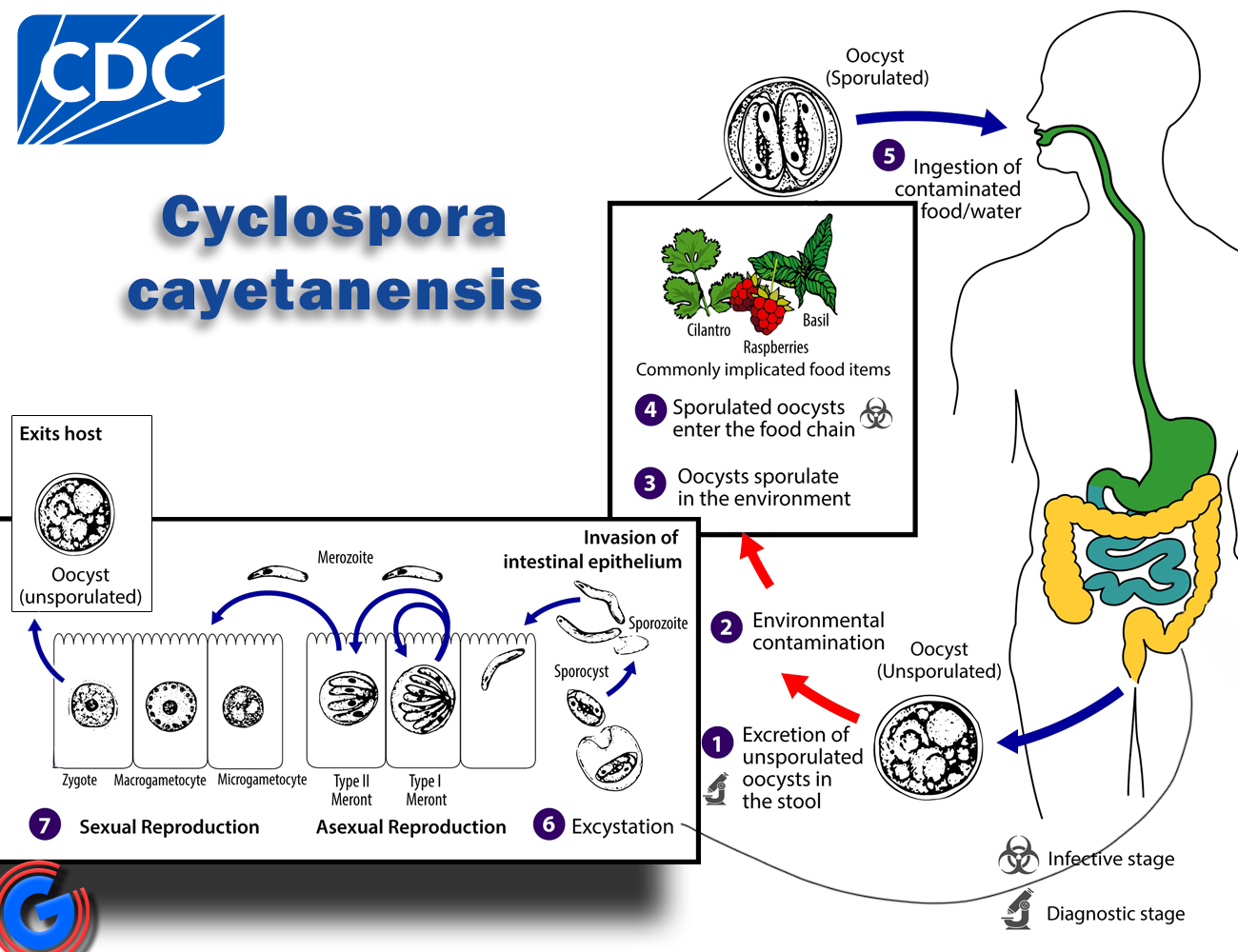
Cyclosporiasis is caused by Cyclospora cayetanensis, a parasite that infects the small intestine. The most common symptom is watery diarrhea, which may be frequent and severe. Other symptoms can include stomach cramps, bloating, increased gas, nausea, fatigue, loss of appetite, weight loss and a low-grade fever. Symptoms commonly begin about one week after exposure and may disappear before returning. Without treatment, the illness can continue for several weeks or longer.
The illness is generally contracted by consuming food or water contaminated with the parasite. Direct person-to-person transmission is considered unlikely because the parasite must remain outside the body for days or weeks before becoming infectious.
Past U.S. outbreaks have been associated with fresh produce, including basil, cilantro, raspberries, snow peas and certain lettuce products. However, federal authorities had not identified a single food source responsible for all of the illnesses included in the July surveillance report.
The Food and Drug Administration was conducting traceback, sampling and other investigative work involving several Cyclospora clusters for which the food source had not yet been identified. The national CDC count also included illnesses that had not been connected to a common outbreak.
Cyclospora infections are most commonly reported during the spring and summer. The CDC considers May 1 through August 31 the primary U.S. cyclosporiasis season, although illnesses have occasionally been identified outside that period.

The parasite is also more common in tropical and subtropical regions. Travelers can become infected by consuming contaminated food or water, and routine chemical disinfection or sanitization methods may not kill Cyclospora.
Thoroughly rinsing fresh produce may reduce the risk of exposure, although washing does not guarantee that the parasite will be completely removed. Consumers should wash their hands before and after handling fruits and vegetables, rinse produce under clean running water and refrigerate cut or peeled produce promptly.
People experiencing persistent or recurring diarrhea should contact a healthcare provider, particularly if they are becoming dehydrated or recently consumed fresh produce or untreated water. Diagnosis generally requires laboratory testing of a stool sample.
The recommended treatment is the prescription antibiotic combination trimethoprim-sulfamethoxazole, commonly known as TMP-SMX. The CDC advises patients to consult a healthcare provider because treatment considerations may differ for children, pregnant patients and people who cannot take sulfa-based medications.
State and federal health officials are continuing to review incoming cases and investigate whether individual clusters can be traced to particular foods, farms, distributors or other common sources.
PREVIOUS REPORT: MIDDLE TENNESSEE (WGNS) - If you thought Middle Tennessee had already checked off enough boxes on the summer health‑nuisance list — ticks, mosquitoes, heat rash, poison ivy — now the national headlines are tossing in a new phrase nobody wanted to hear before breakfast: “explosive diarrhea.” The CDC says that particular description is tied to cyclosporiasis, an intestinal illness caused by the parasite Cyclospora cayetanensis, usually spread through food or water contaminated with feces. It’s not pretty, but it’s real, and cases have been rising in several states since May.
Cyclosporiasis is a food‑borne infection linked most often to fresh produce. The hallmark symptom is watery, sometimes “explosive” diarrhea, along with nausea, stomach cramps, bloating, fatigue, loss of appetite and a low‑grade fever. Symptoms usually start about a week after exposure and can relapse if untreated. The standard treatment is a common antibiotic combination, and most people recover fully with hydration and medical care.
Nationally, Michigan and parts of the Midwest are seeing unusually high case numbers, with hospitalizations ranging anywhere from 20 to more than 80 depending on the dataset. The parasite doesn’t spread person‑to‑person — it has to mature outside the body for a week or two — which is why outbreaks almost always trace back to contaminated food or water. The CDC’s advice is simple: wash produce thoroughly, avoid untreated water and follow basic food‑handling guidelines.
Now, before Tennesseans add “explosive diarrhea” to the list of things to worry about, here’s the local reality. Across Tennessee, including Middle Tennessee, health departments are seeing the usual seasonal bump in gastrointestinal illnesses — mostly norovirus‑like outbreaks in summer schools, daycares and long‑term‑care facilities. These cause sudden vomiting and diarrhea, and yes, people often describe them informally as “explosive,” but officials do not classify them that way. It’s just the colorful language folks use when they’re miserable.
As for Rutherford County, there are no alerts, advisories or clusters tied to cyclosporiasis or any unusual diarrhea syndrome. Clinics are seeing the normal summer mix of GI complaints — foodborne bugs, travel‑related illness, norovirus circulation — but nothing above expected levels. Border states are reporting the same: routine summer GI activity, occasional norovirus outbreaks, and no multi‑state warnings.
So consider this a pre‑warning, not a panic button. The parasite making national news isn’t circulating here, but the usual Tennessee summer stomach bugs certainly are. Wash your produce, keep an eye on symptoms and remember — not every headline applies to home.