Boston Marathon bomber Dzhokhar Tsarnaev sentenced to death - CBS News

BREAKING NEWS: On Friday a jury sentenced 21-year old Dzhokhar Tsarnaev to death for the Boston Marathon bombing.
They swept aside pleas that he was just a "kid" who fell under the influence of his fanatical older brother.
Tsarnaev stood with his hands folded upon learning his fate, decided after 14 hours of deliberations over three days in the nation's most closely watched terrorism trial since the Oklahoma City bombing case two decades ago.
Boston Marathon bomber Dzhokhar Tsarnaev sentenced to death - CBS News
U.S. Attorney General Loretta Lynch called the sentence "a fitting punishment for this horrific crime."
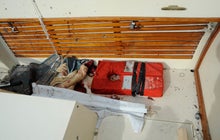

Boston Marathon bombing trial evidence
Evidence presented at the trial of Dzhokhar Tsarnaev who was sentenced to death for the Boston Marathon bombings
The decision sets the stage for what could be the nation's first execution of a terrorist in the post-9/11 era, though the case is likely to go through years of appeals. The execution would be carried out by lethal injection.
"Now he will go away and we will be able to move on. Justice. In his own words, 'an eye for an eye,'" said bombing victim Sydney Corcoran, who nearly bled to death and whose mother lost both legs.
The 12-member jury had to be unanimous for Tsarnaev to get the death penalty. Otherwise, he would have automatically received a sentence of life in prison without parole.
Tsarnaev's father, Anzor Tsarnaev, reached by phone by the Associated Press in the Russian region of Dagestan, let out a deep moan upon hearing the news and hung up.

Explaining Tsarnaev verdict: Sentenced to death on some counts
CBS News legal analysit Rikki Klieman explains how Boston Marathon Bomber Dzhokhar Tsarnaev can be sentenced to death on some counts.
Three people were killed and more than 260 injured when two pressure-cooker bombs packed with shrapnel exploded near the marathon finish line April 15, 2013. Tsarnaev and his older brother, Tamerlan, also killed a Massachusetts Institute of Technology police officer days later.
Tsarnaev was convicted last month of all 30 federal charges against him, including use of a weapon of mass destruction and the killing of an MIT police officer during the Tsarnaev brothers' getaway attempt. Seventeen of those charges carried the possibility of the death penalty.
Tsarnaev's chief lawyer, death penalty specialist Judy Clarke, admitted at the very start of the trial that he participated in the bombings, bluntly telling the jury: "It was him."

Boston Marathon bombing victims
On April 15, 2013, two explosives went off near the finish line of the Boston Marathon in Boston, Mass. killing three and wounding more than 170 ...
But the defense argued that Dzhokhar was an impressionable 19-year-old who was led astray by his volatile and domineering 26-year-old brother, Tamerlan, who wanted to punish the U.S. for its wars in Muslim countries.
Prosecutors portrayed Dzhokhar Tsarnaev as an equal partner in the attack, saying he was so heartless he planted a bomb on the pavement behind a group of children, killing an 8-year-old boy.
To drive home their point, prosecutors cited the message he scrawled in the dry-docked boat where he was captured: "Stop killing our innocent people and we will stop." And they opened their case in the penalty phase with a startling photo of him giving the finger to a security camera in his jail cell months after his arrest.
"This is Dzhokhar Tsarnaev -unconcerned, unrepentant and unchanged," prosecutor Nadine Pellegrin said.

Boston Marathon bomber cries as aunt testifies in his defense
Boston Marathon bomber Dzhokhar Tsarnaev became emotional for the first time during his two-month trial. The 21-year-old cried in court Monday, a...
The jurors also heard grisly and heartbreaking testimony from numerous bombing survivors who described seeing their legs blown off or watching someone next to them die.
Killed in the bombing were Lingzi Lu, a 23-year-old Boston University graduate student from China; Krystle Campbell, a 29-year-old restaurant manager from Medford; and 8-year-old Martin Richard, who had gone to watch the marathon with his family.
Massachusetts Institute of Technology police Officer Sean Collier was shot to death in his cruiser days later. Seventeen people lost legs in the bombings.
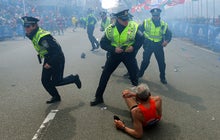
Boston Marathon bombing: Iconic images
Iconic images of the Boston Marathon bombing
Richard's family is against the death penalty, saying that sentencing Dzhokhar Tsarnaev to death "could bring years of appeals and prolong reliving the most painful day of our lives."
Tamerlan Tsarnaev died days after the bombing when he was shot by police and run over by Dzhokhar during a chaotic getaway attempt.
In deciding on the death penalty, the jury had to fill out a detailed, 24-page worksheet in which they tallied up the so-called aggravating factors and mitigating factors.

Prison video of Tsarnaev emerges as Boston bomber faces sentencing
The penalty phase of Dzhokhar Tsarnaev's trial continues Thursday after an emotional day of testimony from survivors. The defense elaborated on a...
The possible aggravating factors cited by the prosecution included cruelty of the crime, the killing of a child, the amount of carnage inflicted, and any lack of remorse. The possible mitigating factors included his age, the possible influence of his brother and his turbulent, dysfunctional family.
The jury agreed with the prosecution on 11 of the 12 aggravating factors they cited, including a lack of remorse. In weighing possible mitigating factors, only three of the 12 jurors found he acted under the influence of his brother.
Tsarnaev did not take the stand at his trial, and he slouched in his seat through most of the case, a seemingly bored look on his face. In his only flash of emotion during the months-long case, he cried when his Russian aunt took the stand.
Tsarnaev did not take the stand, and he slouched in his seat through most of his trial, a seemingly bored look on his face. In his only flash of emotion during the months-long case, he cried when his Russian aunt took the stand.
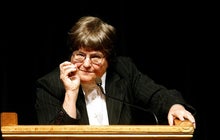
Catholic nun testifies on Tsarnaev's behalf
Dzhokhar Tsarnaev is closer to learning whether he'll be sentenced to death or spend life in prison. On Monday the defense called its last witnes...
The only evidence of any remorse on his part in the two years since the attack came from the defense's final witness, Sister Helen Prejean, a Roman Catholic nun and staunch death penalty opponent made famous by the movie "Dead Man Walking."
She quoted Tsarnaev as saying of the bombing victims: "No one deserves to suffer like they did."
Tsarnaev's lawyers also called teachers, friends and Russian relatives who described him as a sweet and kind boy who cried during "The Lion King." The defense called him a "good kid."
The defense argued that sparing his life and instead sending him to the federal Supermax prison in Florence, Colorado, would be a harsh punishment and would best allow the bombing victims to move on with their lives without having to read about years of death penalty appeals.

Tsarnaev jury hears emotional testimonies as prosecution rests
Before resting their case Thursday, prosecutors tried to drive home why they believe Dzhokhar Tsarnaev deserves the death penalty. Survivors told...
U.S. District Judge George O'Toole Jr. will formally impose the sentence at a later date during a hearing in which bombing victims will be allowed to speak. Tsarnaev will also be given the opportunity to address the court.
In deciding on the penalty, the jury had to weigh so-called aggravating factors - including the cruelty of the crime, the killing of a child, and the amount of carnage inflicted, any lack of remorse - against mitigating factors, which could include his age, the possible influence of his brother and his turbulent, dysfunctional family.
The Tsarnaevs -ethnic Chechens - lived in the former Soviet republic of Kyrgyzstan and the volatile Dagestan region of Russia, near Chechnya, before moving to the U.S. about a decade before the bombings. They settled in Cambridge, just outside Boston.