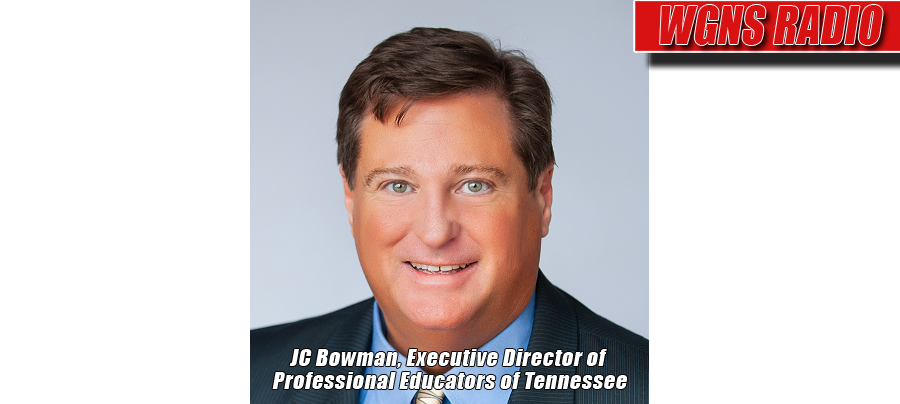
OPINION / EDITORIAL by JC Bowman, Executive Director of Professional Educators of Tennessee:

Mental health challenges and statistics are stunning and unquestionable: approximately 1 in 5 adults in the U.S.—43.8 million, or 18.5%—experiences mental illness every year. Not all of the people who are mentally ill have been diagnosed or are receiving needed treatment. Mental health issues can substantially interfere with or limit important life activities. Mental illness is a cruel disorder that makes understanding our family members even harder on individuals and families.
Mental health conditions are often seen as the cause of suicide, but suicide is rarely caused by any single factor. Many people who die by suicide are not known to have a diagnosed mental health condition at the time of death. Only 50 percent of returning military veterans who needed mental health treatment service received it according to the Substance Abuse and Mental Health Services Administration. Mental health issues in our society have risen significantly over the last decade. Possible causes are the rise of electronic communication and digital media, as well as declines in sleep duration, according to research published by the American Psychological Association.
This COVID-19 global pandemic has kept many people from receiving the help they need. Common sense tells us that mental health numbers have had to escalate. Relationships, substance use, physical health, and job, money, legal, or housing stress has added to this. Toss in a presidential election year, and we are a witness to mass trauma and increases in levels of depression, anxiety, and fear. Everyone in a family, including extended family, is likely to be impacted by a family member with mental illness symptoms. Logistical problems, such as long travel distances also hinder proper assistance. And at this time of year, the holiday season adds to the stress.
For whatever reason, the truth is that we often cannot help those closest to us. We are too close to the situation, we do not know what part of ourselves to give or fail to give that matter the most. We may be dealing with issues on our own. In my case, I have seen and talked with a significant number of people needing help. During COVID-19, it is only escalating. Unintentionally, we don’t pay enough attention to those closest to us. The part of ourselves that we give to those closest to us may not be the part they need the most. Sometimes, we fail to understand the spiral downward in the mental health of those closest to us. Much like Norman Maclean, we have come to realize those nearest to us are the ones that elude us the most. Our dads, moms, spouses, and children may elude us. Even if we have lived under the same roof for years, we never feel that those closest to us understand us or that we even understand them.
Stress, unrealistic expectations, or sentimental memories that go with the holiday season can be a trigger for many people with mental illness. Today, we already have fewer social supports and financial resources to tackle mental health issues. There is a general lack of understanding and awareness about mental health problems and treatment options. Those with mental illness need their families even more. It makes it even more critical that we can continue to love the very people who elude us most.
It’s vital to learn as much as we can about the specific mental illness a family member is facing, just as you would a physical illness. That does not mean you have all the answers or that you cannot set certain limits. It is natural to be confused or angry at unpredictable behavior. However, we must separate the behavior from the family member as much as possible. Those with a mental health illness must also take special care to keep an eye on their overall health and wellness, especially during the holidays.

The lack of understanding about what mental illnesses are and what causes them leads society to be less sympathetic to those who have mental illnesses. This is a tragic reality those with mental illness face. We need the courage to speak up and out about this issue, if not for ourselves then for others. In states or areas where more money was spent on treating and addressing mental health conditions, there is likely more understanding. There should never be any shame for anyone about seeking mental health treatment.
Treatment depends on a diagnosis, and differ by person. There’s no “one size fits all” treatment. Family support can make a big difference in helping people with mental illness. We should contemplate the mental health challenges that some face and the obligation as a family to address the apprehension every holiday season brings. Together, we can overcome the stigma associated with mental health issues, and more importantly, we can support those facing mental health issues this holiday season, and every day. Perhaps the truth is that we can love completely without complete understanding.