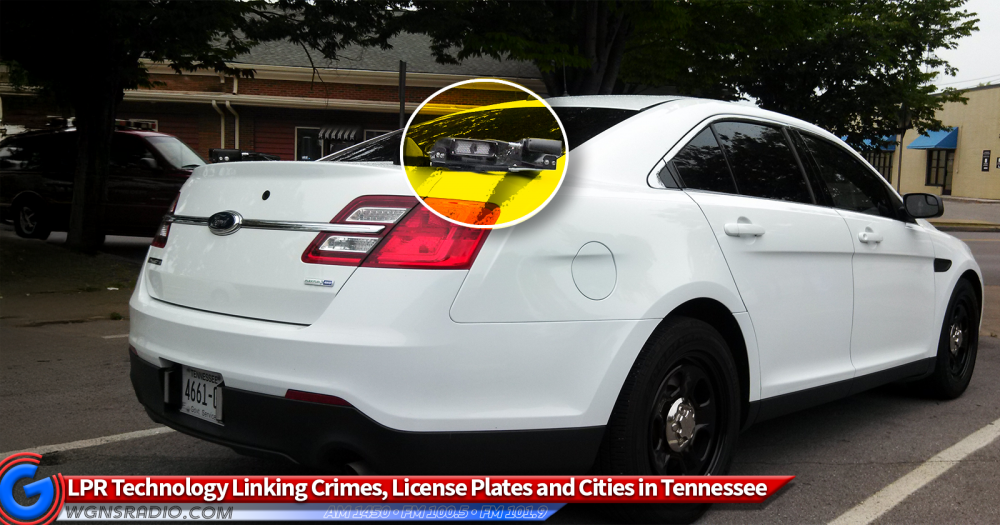

RUTHERFORD COUNTY, TN - Police departments throughout Middle Tennessee continue to benefit from advanced license plate reader (LPR) technology, which is proving to be a vital tool at multiple levels of law enforcement. From making an initial arrest to piecing together crimes across city and county lines, officers say the technology is delivering results that were previously much harder to achieve.
Murfreesboro Police Captain Clayton Williams highlighted how LPR systems can help connect the dots in multi-jurisdictional investigations...
This week in Mt. Juliet, LPR technology led to the arrest of two convicted felons driving a stolen Nissan Sentra that was taken in Nashville just one week earlier. After the license plate of the inbound car was scanned, the LPR system notified officers who quickly stopped the driver. The suspects in the car, ages 39 and 43, were both wanted in multiple counties, and police found numerous items in the car that is now being investigated as potential stolen property.
Beyond fighting auto theft, the high-tech scanners have also proven invaluable in missing person cases... It’s not uncommon for officers to locate missing elderly residents with dementia when their vehicle passes a patrol car equipped with an LPR device. The instant alert can mean the difference between a prolonged search and a quick, safe recovery.
Overall, law enforcement leaders say LPR technology improves efficiency in locating stolen vehicles, clearing cases, and even enhancing traffic safety. Still, concerns remain about data privacy, potential misuse, and the risk of targeting certain communities unfairly.
Captain Williams explained that the LPR device works in the background as the officer drives, instead of officers purposely scanning certain vehicles in certain areas… In most cities, the LPR takes in data of license plate numbers that are compared to a hot list of information tied to wanted vehicles or wanted persons. If the system makes a match, the LPR will notify the officer who visibly confirms the plate information before making a traffic stop… Most police departments keep LPR data for a limited period, unless the information is tied to an ongoing investigation.
As the use of LPR systems expands nationwide, police departments may face the challenge of further explaining and/or showing how departments are balancing public safety benefits with protecting civil rights. This could be an ongoing problem in the wide-world of technology.