
UPDATED Editorial: Just Sharing – From Bart Walker at WGNS: Every now and then, a story lingers—refuses to leave your mind. That happened to me recently while listening to a CBS Morning News segment on WGNS. It unsettled me so deeply that I felt I had to share it. This isn’t a medical report, and I’m not claiming expert status—but I am someone who’s reported on the opioid crisis for years. So, take this as food for thought. Let it marinate.
A Disturbing Ingredient in an Energy Drink?
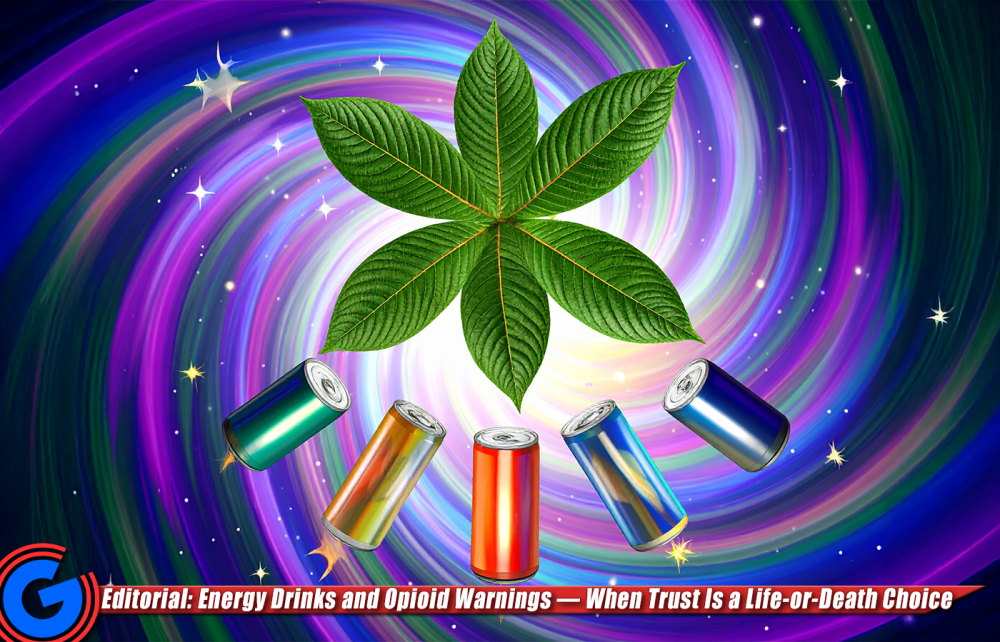
The story centered around a particular energy drink sold at gas stations and convenience stores that reportedly contained 7-hydroxymitragynine (7-OH)—a compound found in the kratom plant. If you’ve never heard of kratom, it's a tropical tree native to Southeast Asia, and its leaves can produce both stimulant and sedative effects, depending on the dose.
Now, 7-hydroxymitragynine is not an opioid by classification. But according to research from the National Institute on Drug Abuse (NIDA) and statements from the FDA, this compound does bind to the same opioid receptors in the brain as morphine or oxycodone—meaning it can produce similar effects. In fact, 7-OH is believed to be one of the primary alkaloids responsible for kratom's pain-relieving and potentially addictive properties.
This wasn’t a case of “all energy drinks are dangerous.” Not even close. But the concern raised in the news report was that one specific product marketed as an “energy drink” may have included kratom-derived substances. And while it may only be one product, what happens if it’s the one your teenager picks up? Or worse—gets hooked on?
When Curiosity Becomes Crisis
Here’s why this matters:
-
7-OH is not approved for any medical use in the U.S., and products containing it are not regulated like pharmaceuticals or even alcohol and tobacco.
-
The FDA has issued multiple warnings about kratom, citing concerns about addiction, abuse, and contamination with substances like salmonella and heavy metals.
-
Some kratom products have been seized by the FDA for illegal health claims or unsafe manufacturing.
-
The DEA has considered classifying kratom's main alkaloids, including 7-OH, as Schedule I substances, but legal and public opposition stalled that process.
Let’s not confuse these warnings with conspiracies or paranoia. It’s about recognizing red flags when they flash.
The Deeper Issue—Access Without Oversight
This is about more than just one drink. It’s about how easily products with powerful psychoactive ingredients can land on store shelves with little to no regulation—especially compared to alcohol, tobacco, or prescription medications. If a product affects the brain’s opioid receptors, it deserves scrutiny.
We’ve been here before. OxyContin and other opioids were aggressively marketed, downplayed, and prescribed until addiction swept through communities like a wildfire. The same patterns—profits over safety, weak regulation, delayed government response—are now appearing in new, unregulated forms.
Trust Matters More Than Ever
Again, I’m not a doctor. But I’ve interviewed grieving parents. I’ve seen how addiction begins innocently—with a back injury, a bottle of pills, or now, maybe a drink from a gas station.
So, if you’re a parent, grandparent, or someone who cares—don’t assume everything on the shelf is safe just because it's there. Read the label. Research the ingredients. Talk to your doctor, not an influencer. If something seems questionable, ask a professional.
What We Know So Far:
-
7-hydroxymitragynine is a potent kratom alkaloid with opioid-like activity.
-
The FDA and CDC have issued warnings about kratom's health risks.
-
Some kratom-related products have tested positive for harmful contaminants.
-
There is ongoing debate about placing 7-OH under federal control due to its potency.
Final Thought: Don’t Wait
This isn’t about panic—it’s about prevention. The earlier we ask questions, the less likely we are to read tragic headlines later. You don’t need to be an expert to recognize when something doesn’t feel right.
So, please—if you remember anything from this message—find someone you trust. A physician. A pharmacist. A scientist. Not a Reddit post or a TikTok “guru.” Because one day, this might not be a theory—it could be your child, your friend, your story.
And by then, it may be too late.
Links to Learn More:
- FDA Issues Warning Letters to Firms Marketing Products Containing 7-Hydroxymitragynine | FDA
- Products Containing 7-OH Can Cause Serious Harm | FDA
- FDA Takes Steps to Restrict 7-OH Opioid Products Threatening American Consumers | FDA
- July 2025 Letter to Healthcare Officials from the FDA (Click Here to View the PDF)