MURFREESBORO, Tenn. — The City of Murfreesboro announced on Tuesday, Aug. 19, 2025, the launch of a public communication initiative called “Better Way to Give” aimed at educating residents on alternatives to giving directly to individuals asking for assistance.
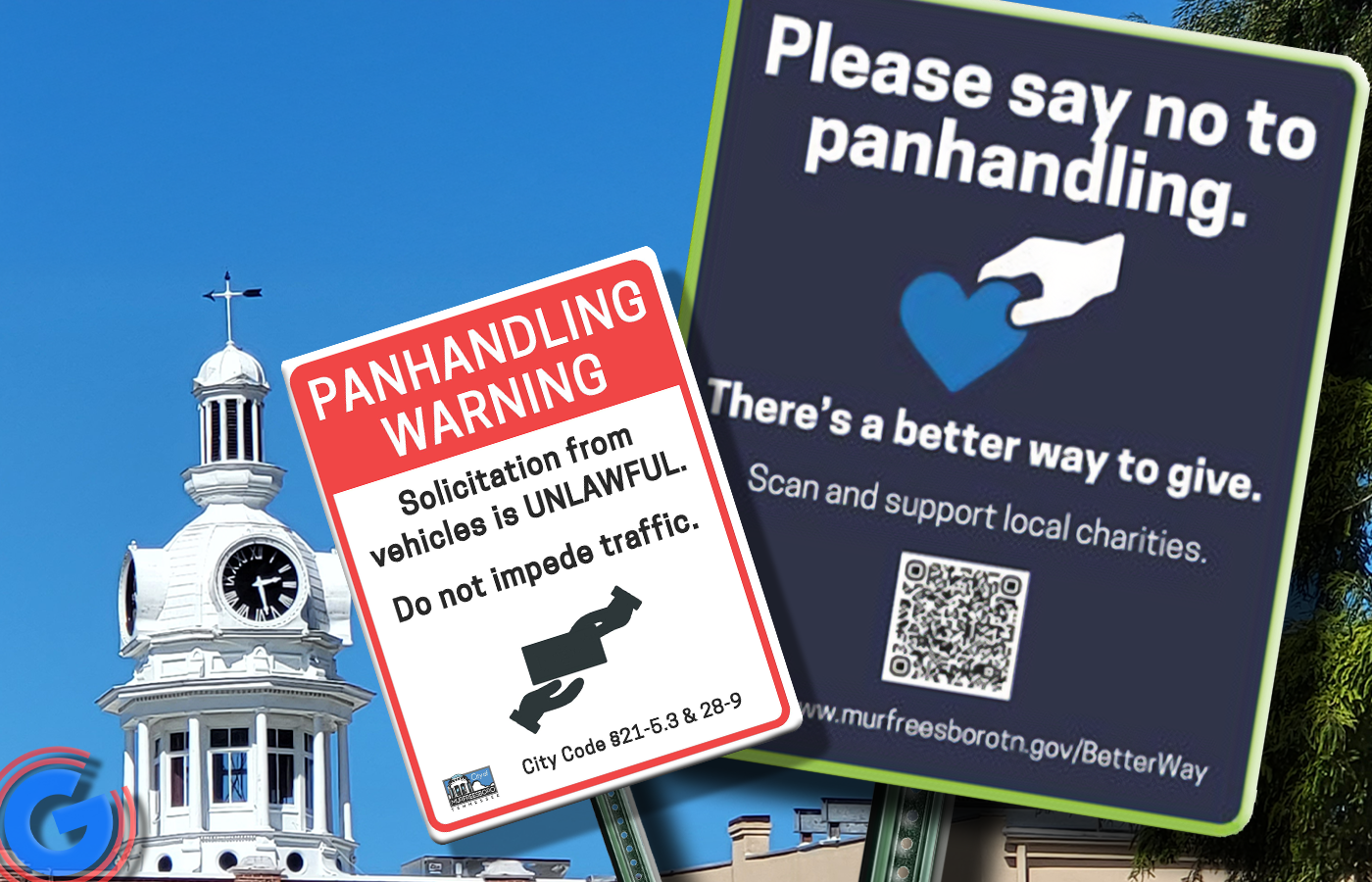
According to a media release from the City of Murfreesboro, new signage will begin appearing around the Downtown Square urging residents to “Please say no to panhandling” and instead consider “a better way to give.” Each sign will include a QR code that directs people to a city webpage with information about local charities: www.murfreesborotn.gov/BetterWay.
The media release states that “Murfreesboro is a caring community” and encourages residents to “consider the most effective ways to make a positive change” by donating to Continuum of Care agencies. These organizations—including the Journey Home, Murfreesboro Cold Patrol, and the Salvation Army—offer services such as food, shelter, counseling, medical care, and job assistance for those experiencing homelessness.
The release also noted that solicitation from vehicles is prohibited under City Code Section 21-5.3, citing traffic safety concerns. Panhandling at intersections, officials said, can pose risks to both drivers and pedestrians.
“By donating to these organizations,” said Mayor Shane McFarland in the city’s announcement, “You can contribute to a comprehensive support system that makes a lasting difference.”
The new signage campaign began on Monday, Aug. 18, 2025, with more signs expected to be installed throughout the week. Scroll down for a more in-depth look at the photo above this article and for the thoughts of one business owner...
IN DEPTH - YOUR THOUGHTS? WGNS' Scott Walker talked to one business owner on the downtown square, who asked not to be named, and he told WGNS News, “I don’t want to answer that I like or dislike the new signs, but I do understand why they are being placed in the downtown area. We’ve seen an increase in those who are asking shoppers for money.”
The business owner added that some of the individuals asking for money “…startle my customers, which hurts my business.” When asked if he had ever offered assistance to those seeking help, he said, “I have, and I even gave a couple a ride to The Journey Home.”
Walker followed up by asking has given any homeless money, while on the square. After a pause, the owner looked downward, then shifted his attention to a homeless woman sitting nearby on one of the few benches around the square. “Yes, I gave the two about $20, with the hope that they could gather a few more bucks to at minimum, rent a hotel room for the night to clean up, feel human again.” When Walker asked what he meant by “human,” the business owner replied, “I wanted them to feel the dignity that they have probably lost, to not have that thought that everyone was staring at them.”
Walker highlighted, “I noticed you looked toward the person sitting on the bench, the one at the corner of Maple and College Street. Why?” With a slight, emotional pause, the owner responded, “I think the city removed all of the benches around the square so that homeless would not have a place to sit. That bothered me, but I don’t know what the solution is if Murfreesboro lacks the manpower to provide them with mental health help — I really don’t, and it saddens me.”

Before Walker left, the unnamed business owner added, “I think the signs tell out-of-town visitors that we, as Murfreesboro residents, don’t care about the homeless. While the signs are correct in suggesting better ways to help, they won’t actually ‘HELP’ anyone. Instead, they will make us, the businesses, look heartless. That, I do not like at all.”
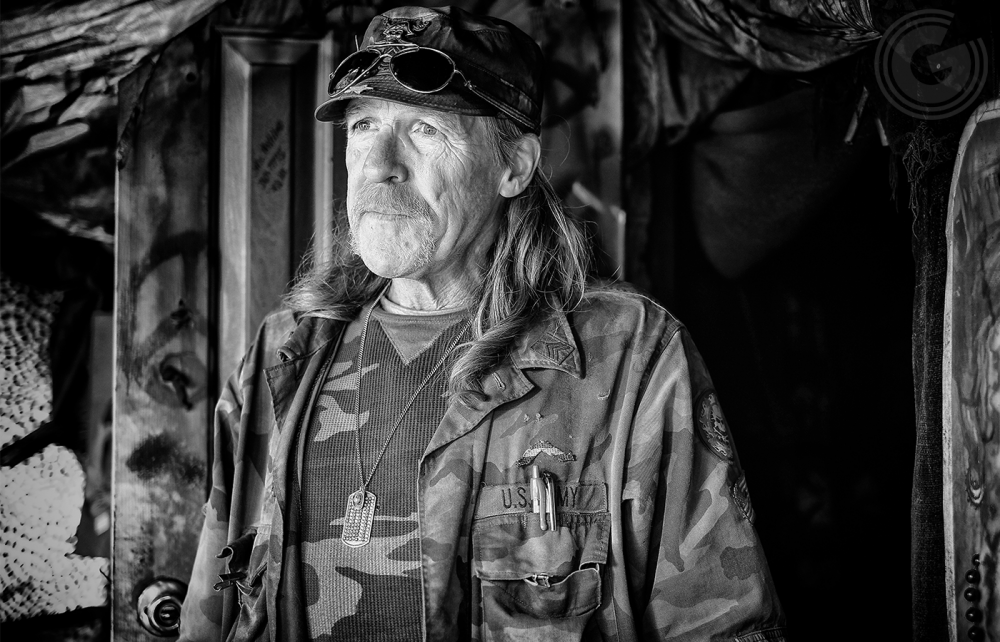
PHOTO ABOVE ARTICLE: In a 2014 interview, WGNS’ Scott Walker reflected on the man known as “Sarge,” a Desert Storm veteran whose life was marked by both service and struggle. Walker said, “I will always remember Sarge as a Desert Storm Veteran who left his wife because he did not want to put her through the Post Traumatic Stress he was going through after losing his best friend in a time of war in the early 1990's. He was only 53 when he died. He was a kind man.”
Walker said you never truly know what struggles lie beneath the weathered skin of individuals who live in the elements. Some are U.S. veterans, others have battled drug or alcohol addiction, but most of the homeless he has spoken with over the years suffer from some form of PTSD. The trauma, according to the stories he’s heard, ranges from childhood abuse and sexual abuse to combat-related experiences, schizophrenia, and more.
“The point is, you really don’t know another man’s—or woman’s—struggle until you ask,” Walker said. Often, when you take the time to ask, people want to share. They want others to understand that there is so much more to them—that behind their current circumstances is a story that shaped who they are today. And while those stories may be painful, Walker added, it’s never too late to face them head-on and begin to make a change.
If Sarge were alive today, he'd be 63-years-old.
Walker has talked to, photographed and reported the stories of thousands of people, with the majority being homeless. See some of those stories by visiting SmallTownBigWorld.com.