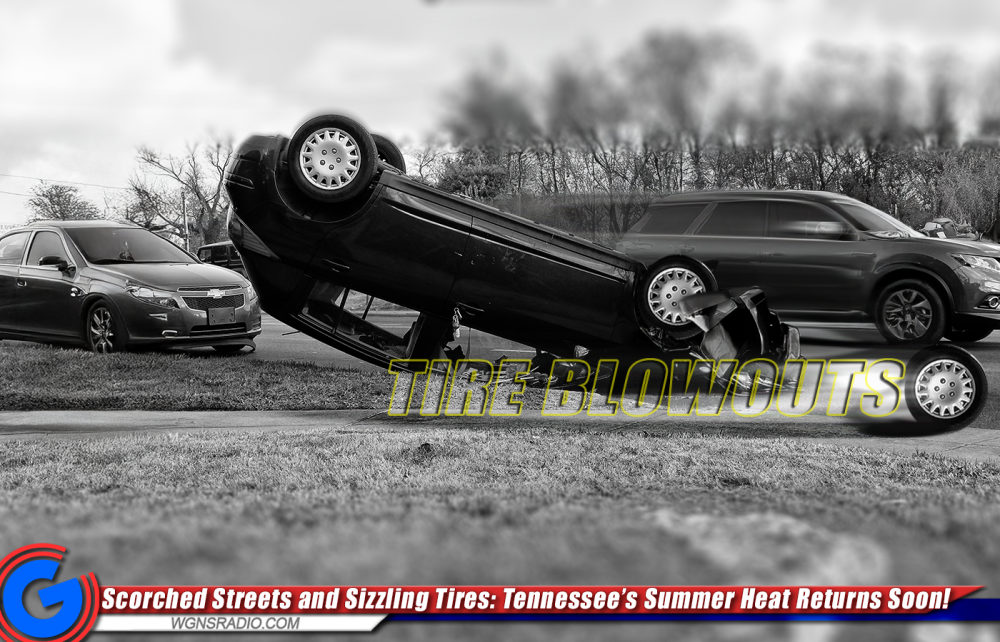
Murfreesboro, TN – Just because this week’s cooler breeze feels like a gift, don’t pack away the sunscreen yet—Middle Tennessee’s signature summer heat isn’t done with us. While temperatures have dipped slightly, the mercury is expected to climb again, and when it does, asphalt can reach a blistering 160°F. Hot weather combined with worn or neglected tires can create dangerous conditions that every driver should be aware of.

For those hitting the road one last time this summer, the National Highway Traffic Safety Administration (NHTSA) estimates that tire failure causes approximately 11,000 crashes each year. The most common causes include tread separations, blowouts, bald tires, and underinflated tires. Underinflation alone is a major culprit—it reduces fuel economy, creates sluggish handling, lengthens stopping distances, and places extra stress on tire components.
When it comes to driving safety, few factors are more important than the condition of your tires. Poor tire maintenance—such as failing to keep the right air pressure or skipping regular rotations—can lead to flats, blowouts, or tread separation. Excessive heat only makes the risk worse. At highway speeds, especially in hot weather, underinflated tires, heavy loads, and high speeds all combine to generate dangerous levels of heat and stress that can cause catastrophic failure.
According to federal data from the NHTSA and Department of Transportation, there were 646 motor vehicle fatalities in 2023 linked directly to tire-related issues.
Why does heat matter so much? As a tire rotates, its sidewall flexes where the rubber meets the road. This constant flexing, along with road friction, generates heat. Add in heavy loads, and the stress increases, creating even more heat and wear. Rubber also begins to soften at around 110°F, reducing grip and increasing flex. On scorching days, that extra flexing can quickly turn into a dangerous situation.
In short, hot days aren’t just uncomfortable—they’re punishing on your tires. Blowouts become a serious risk if your tires are underinflated, overinflated, or aging. Staying safe on the road starts with simple maintenance: keep your tires properly inflated, rotate them regularly, and check your tread.
As for the week ahead, the weather in Rutherford County should bring a bit of relief. Monday’s high is forecast at 88 degrees, with an overnight low of 58. On Tuesday, the high will reach about 80, and Tuesday night’s low is expected to drop to 53.
For more tire safety tips, visit the NHTSA Tire Information website.