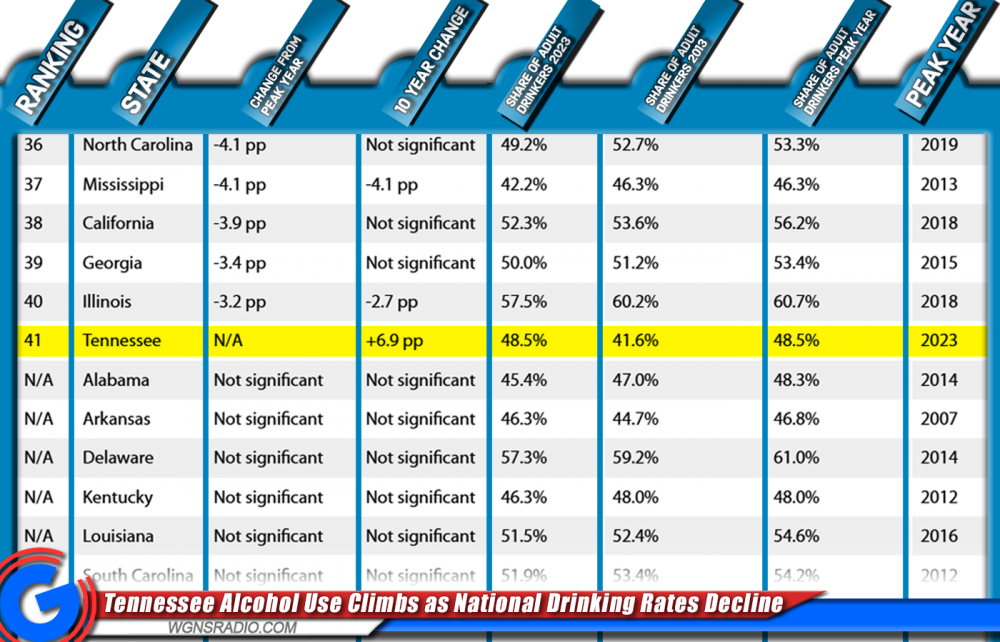
MURFREESBORO, Tenn. – A new national study shows alcohol consumption in the United States is falling, but Tennessee is moving in the opposite direction. The report showed that the Volunteer State was the only state in the U.S. to record an uptick in boozing ack swigs of what some call happy juice, while other calls

According to an analysis by Trace One, which used data from the Substance Abuse and Mental Health Services Administration (SAMHSA), U.S. drinking rates have dropped to near a 90-year low, while Tennessee has experienced a noticeable increase in alcohol use over the past decade.
National Trends Show Decline - In 2023, 52.3% of U.S. adults reported drinking alcohol in the past month, down from a peak of 56.7% in 2014. That decline represents nearly 2 million fewer Americans drinking compared to a decade ago. Public skepticism of alcohol has also grown. A recent Gallup poll found only 54% of Americans now drink, with many citing health concerns as a major factor.
At the same time, the market for alcohol alternatives has surged. Searches for non-alcoholic beer, zero-proof cocktails, and mocktail recipes have grown rapidly, with major beverage companies like Heineken, Guinness, and Budweiser launching alcohol-free versions of popular products. This trend reflects a cultural shift toward wellness, moderation, and broader lifestyle changes.
Tennessee Trends Move in the Opposite Direction
While much of the nation is cutting back, Tennessee stands out as the only state to post a significant increase in alcohol use.
- In 2013, 41.6% of Tennessee adults reported drinking alcohol.
- By 2023, that number had risen to 48.5%.
- That’s a 6.9 percentage point increase in a decade, marking Tennessee’s highest level of reported alcohol use in recent history.
This uptick bucks the national trend and raises questions about changing cultural habits in the state.
Why the Difference? Experts suggest several reasons why Tennessee might differ from the rest of the nation:

- Economic and cultural growth: Tennessee’s booming cities like Nashville and Chattanooga have thriving restaurant, nightlife, and tourism sectors, which may fuel increased alcohol use.
- Changing demographics: An influx of new residents from other states could be reshaping social norms around drinking.
- Slower adoption of alcohol alternatives: While demand for non-alcoholic beverages is growing nationally, Tennessee’s uptake may be lagging behind other regions.
Broader Context - Across the country, alcohol use remains most common in northern states such as Vermont, New Hampshire, and Wisconsin, while the lowest consumption levels are found in states like Utah, Mississippi, and West Virginia. In the Southeast, most states have reported stable or flat drinking rates over the past decade—but Tennessee is the outlier, showing a measurable rise.
Looking Ahead - The growing market for alcohol alternatives suggests that future trends may shift, even in Tennessee. As non-alcoholic options become more widely available and health-conscious living continues to influence consumer behavior, experts will be watching closely to see whether Tennessee’s alcohol use continues to rise—or eventually follows the national downward trend.

- See the ENTIRE report HERE.