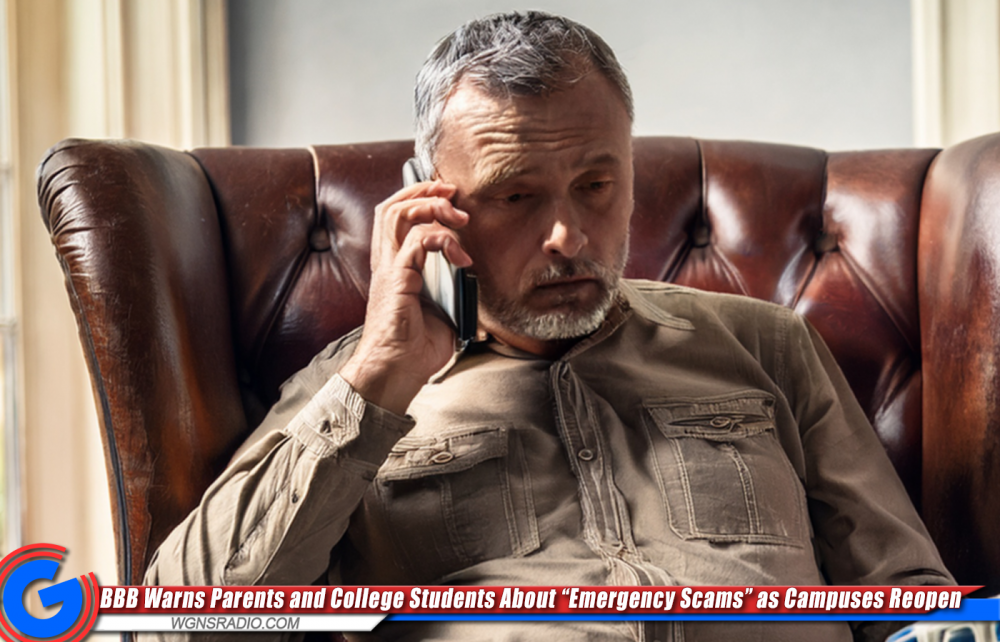
MURFREESBORO, Tenn. — As students return for the fall semester, the Better Business Bureau Serving Middle Tennessee and Southern Kentucky is warning families about a rise in “emergency scams,” often called “grandparent scams,” that exploit fear and urgency—especially when young adults are living away from home.

According to BBB, scammers frequently pose as a loved one in crisis, claiming an arrest, accident, or medical emergency. Using details pulled from social media—nicknames, travel plans, photos—fraudsters craft convincing stories to pressure relatives into sending money fast. The deception is getting more sophisticated: the Federal Trade Commission has reported criminals using voice cloning to mimic a loved one’s voice from online videos, making the plea sound real.
“Parents sending their kids back to school already have enough to think about,” said Robyn Householder, President & CEO of BBB Middle Tennessee and Southern Kentucky. “Scammers are counting on that anxiety to trick families into sending money without asking questions. Take a moment to slow down, verify the situation, and protect your hard-earned money.”
How to Spot and Stop Emergency Scams
-
Pause before reacting. No matter how urgent or emotional the message sounds, take time to verify.
-
Contact your loved one directly. Use their known number or check with other relatives or friends.
-
Ask specific questions. Challenge the caller with information only the real person would know.
-
Tighten privacy settings. Limit what personal info, photos, and videos are visible on social media.

-
Never send money to unverified sources. Requests for payment apps, gift cards, or wire transfers are red flags.
-
If someone shows up to collect money, do not open the door—call police immediately.
Students and families who encounter or fall victim to a suspected scam should document the interaction, stop all communication, contact their bank or payment app immediately, and report the incident to authorities. The BBB also encourages consumers to share incidents through BBB Scam Tracker and to alert campus officials so others can be warned.
For more consumer protection tips and local scam alerts, visit the Better Business Bureau Serving Middle Tennessee and Southern Kentucky online or contact their office for guidance.
If you believe you’ve been targeted by an emergency scam, report it immediately to local law enforcement, the FTC at ReportFraud.ftc.gov, and BBB’s Scam Tracker at BBB.org/ScamTracker.