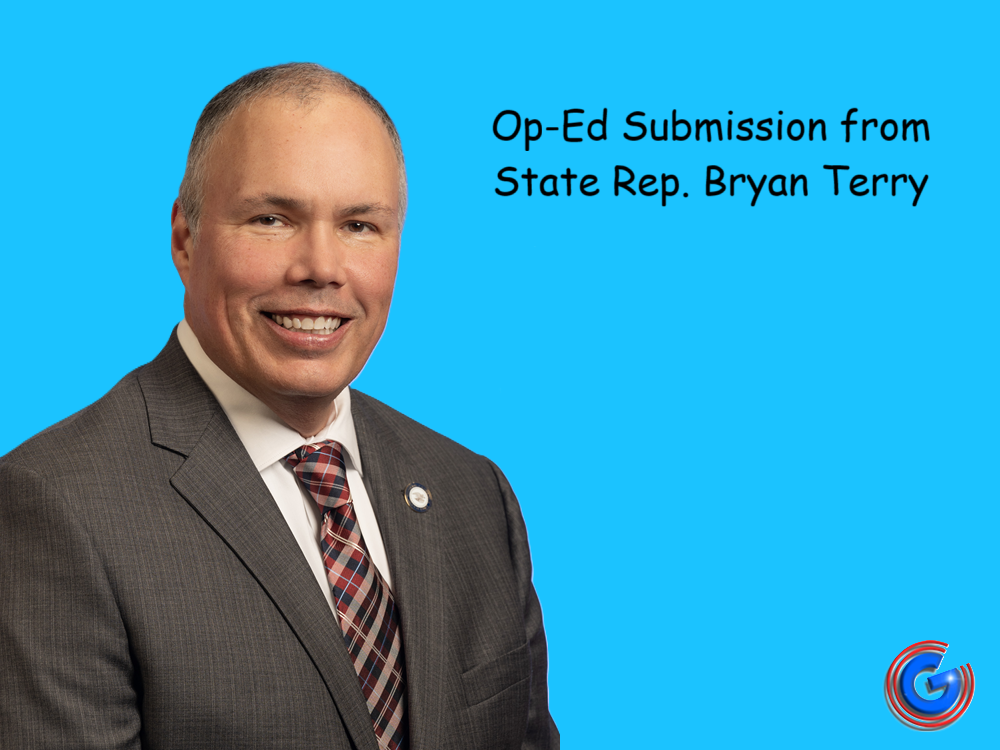
Op-Ed from State Representative Bryan Terry, MD (TN 48th District, R)

Following the murders of Charlie Kirk and Iryna Zarutska, I’ve reflected on the environment that enabled such tragedies. Beyond morality, psychology, and polarization, one concept stands out: the deliberate use of rhetoric and narrative to create conditions for violence.
This is known as stochastic terrorism, which explains how public figures can be demonized until their deaths become not only foreseeable but, in some circles, celebrated.
It bridges words and bloodshed, as cultural cues and political messaging prime unstable individuals to commit atrocities while sympathizers applaud from the sidelines.Scholars have shown that stochastic terrorism creates a climate where violence against a target becomes not only possible but probable.
This cycle is sustained when public or political communities legitimize such violence, especially when leaders portray opponents as existential threats and when acts of violence are excused, celebrated or valorized within communities.
The assassination of Charlie Kirk fits this model.
For years, left-wing activists, media voices, and influencers portrayed him not as a man with political disagreements but as a racist, a fascist, and a threat to democracy.
That constant delegitimization laid the groundwork. No one had to issue an explicit order; the endless drumbeat of vilification made it inevitable that someone would see his murder as “necessary.”

This tactic is not new. Saul Alinsky’s Rules for Radicals advised activists to “pick the target, freeze it, personalize it, and polarize it.” By isolating opponents and making them the embodiment of all that is wrong, political opposition becomes moral condemnation. Once someone is no longer a fellow citizen but an existential enemy, violence becomes
predictable.
That is why politicians, media figures, and influencers who engage in reckless rhetoric often bear responsibility, even when they deny it.
We’ve heard elected officials and commentators call Trump and his supporters “fascists,” “racists,” and even liken them to Hitler.
Former President Joe Biden declared that “Donald Trump and the MAGA Republicans represent an extremism that threatens the very foundations of our republic.”
Rep. Alexandria Ocasio-Cortez described Trump as “echoing the words of Adolf Hitler.” Former Vice President Kamala Harris agreed when asked if Trump was a fascist. To a mentally unstable person, this kind of rhetoric can sound like a call to action.

The media often amplifies these frames. Headlines and commentary portray Trump, Kirk, and others not as legitimate voices in debate but as existential dangers. Influencers branded them “white supremacists” and “enemies of democracy.”
None of them issued a direct order, but that is how stochastic terrorism works: relentless demonization strips away humanity until a lone actor decides violence is justified. When it happens, politicians claim ignorance, journalists insist they were “just reporting,” and influencers say they were “just sharing an opinion.” Plausible deniability becomes a shield for incitement.
Equally telling is what happened after Kirk’s murder. Many on the left did not grieve, condemn or stay silent. They cheered.
Social media filled with comments mocking his death, portraying it as deserved, or a victory for justice.
This is the second half of stochastic terrorism: normalization. The rhetoric primes the act, the assassin pulls the trigger, and the public reaction completes the circle. The same cycle appeared after Iryna Zarutska’s death, not through open celebration but silence.
Major media outlets delayed coverage of her murder for weeks, an omission that carried its own message.
That silence amounted to tacit approval, suggesting her life was not worth mourning. In this framework, selective inattention normalizes violence by reducing its moral weight. Just as cheering validates killing, ignoring it can send the same corrosive signal.
The murders of Charlie Kirk and Iryna Zarutska remind us that words are never harmless. They shape public perception, erode legitimacy, and set the stage for violence, not through direct orders, but by cultivating an atmosphere where violence becomes probable and socially rewarded.
To honor their memory, we must recognize that free speech is not a license to relentlessly dehumanize opponents until their deaths are cheered or ignored.
The battle against stochastic terrorism is not fought with censorship but with accountability, moral clarity and courage to call out reckless rhetoric wherever it appears.
A strong republic thrives on debate, not demonization, and on persuasion, not persecution.
If America cannot relearn that lesson, words will continue to become weapons and more lives will be shattered.