
UPDATED: RUTHERFORD COUNTY, TN - The momentum surrounding book bans and those against the idea of censorship has been building. During the Rutherford County Library System (RCLS) Board of Directors meeting held this past August, at least two people highlighted their concerns surrounding what many see as a slippery slope.
During the public comment section of the meeting held about three months ago, a man by the name of Josh Walker addressed the board on "...Trans existence as scientific/historical fact," and "...opposed bans as Christian nationalist agenda, and emphasized intellectual freedom." According to the minutes from the same meeting, Tatiana Silvas also spoke on the subject of book bans... The minutes stated that Silvas, "...argued against censorship based on personal / political views, and [a] need for diverse perspectives."
Silvas also noted that the library board had already voted to remove a book during its previous meeting in July. According to the RCLS Board Minutes, the book removed was Being You by Megan Madison, Jessica Ralli, and Anne/Andy Passchier. After a discussion about the book’s theme, circulation, and placement, board member Susan Quesenberry made a motion to remove Being You from the library shelves, which was seconded by Darrell Thomas. When the vote was taken, the majority of board members supported the motion, while a minority opposed it. As a result, the motion passed shortly before the meeting adjourned on July 21, 2025.
"Being You" is a book designed to help adults start conversations with toddlers about gender and identity, using simple language paired with supportive imagery. The book is written and illustrated to encourage deeper discussions between young children and adults about gender and related topics. According to the book’s description on Amazon.com, it was “developed by experts in the fields of early childhood and activism against injustice.” The full title is Being You: A First Conversation About Gender.
Removing books from a public library based on the personal beliefs of eight board members of the Rutherford County Library System sets a precedent that could allow larger groups in the community to demand more removals—and, as seen in other states, can even lead to lawsuits that reach the U.S. Supreme Court. A single vote may seem small, but nationally, these decisions have already triggered legal battles that could reshape how libraries operate across the country.
In Murfreesboro, one book was removed after a vote by eight members of the Rutherford County Library System board, with one member absent. While the action involved only one title, it raises the possibility of a wider push to remove dozens or even hundreds of books from local shelves based on similar objections.
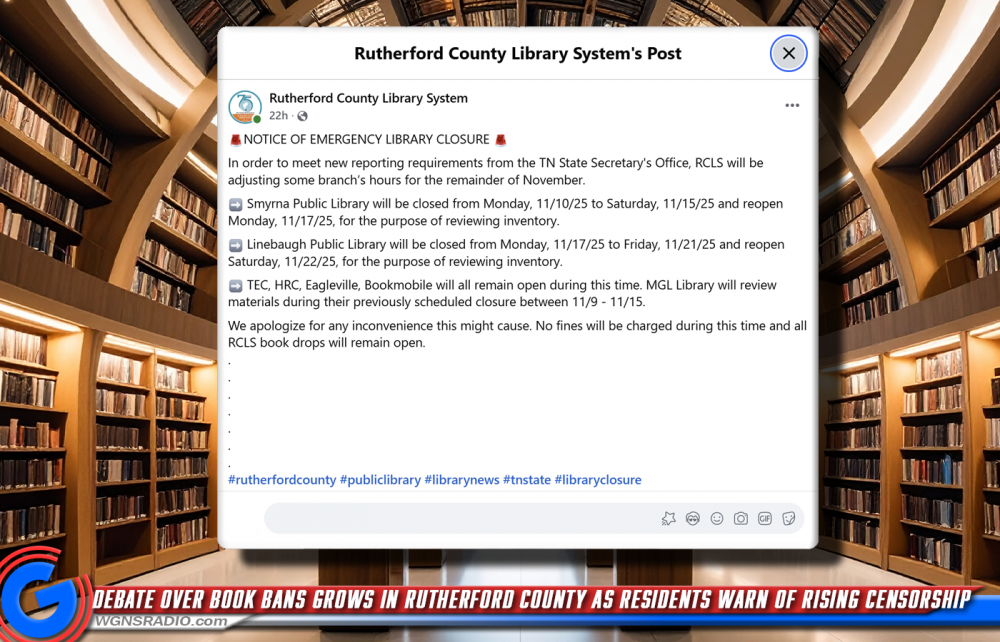
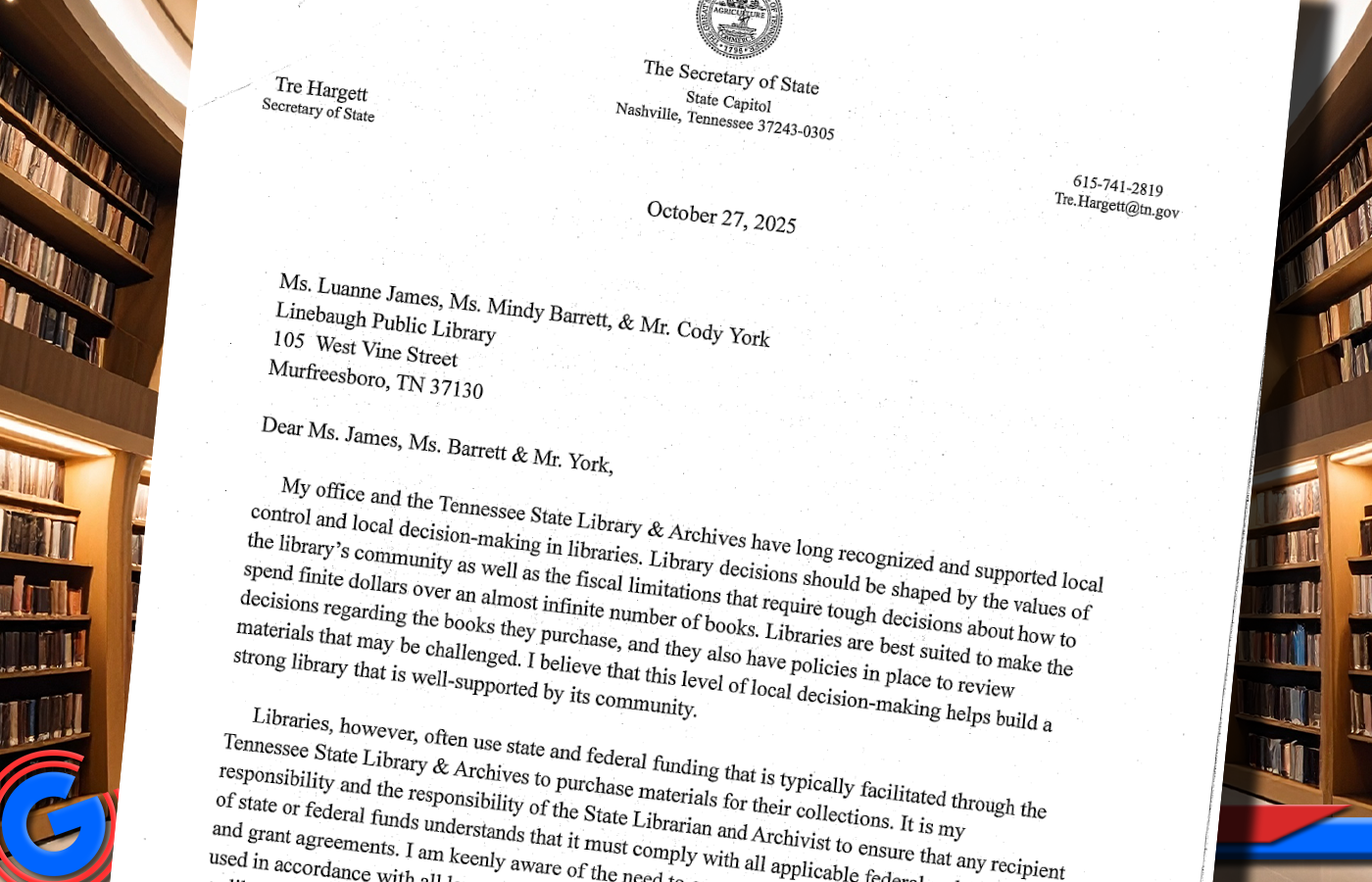
Letter from the Tennessee Secretary of State: Following the July and August meetings, the Rutherford County Library System announced an immediate closure of several branches, stating it was necessary “In order to meet new reporting requirements from the TN State Secretary's Office,” according to a social media post. You can READ the letter sent to the library from the Tennessee Secretary of State HERE.

Book challenges are not new—debates over what should or shouldn’t be available in libraries have been happening for more than a century—but the intensity and frequency of bans have sharply increased in recent years.
In October, U.S. Representative Jamie Raskin introduced a congressional resolution warning that the growing wave of book bans threatens First Amendment rights and public access to information. The resolution cites long-standing legal precedent protecting the right to read, and argues that book bans overwhelmingly target specific subjects and communities.
It is worth noting that if one ideological belief can justify removing thousands of books from shelves nationwide, then an opposing belief could just as easily be used to justify removing thousands more. Once censorship begins, the end point is uncertain.
Meanwhile in Texas, a lawsuit known as Little v. Llano County, is now awaiting possible review by the U.S. Supreme Court after the Fifth Circuit Court of Appeals ruled that government officials may remove books for ideological reasons—a reversal of a lower court ruling that had deemed the removals unconstitutional. Until now, public libraries at all levels—city, county, state, and federal—have long been viewed as spaces that protect free speech through access to diverse books.
Critics argue that the decision to read, borrow, or even view a book should belong to citizens, not government bodies. When it comes to children’s books, opponents of bans emphasize that parents and caregivers already have the right to oversee what their own children read—and that this responsibility should not extend to restricting access for everyone else.

PREVIOUS ARTICLE Released Prior to Further Details Being Available: Rutherford County, TN - Rutherford County residents may find their favorite library branch temporarily closed this week, but the reason isn’t staffing shortages or safety concerns—it’s a planned tech transformation. The Rutherford County Library System (RCLS) has announced emergency closures at several locations, including Linebaugh, Smyrna, and MGL, as part of a countywide technology upgrade.
Library officials say the closures, which began in early November, are expected to last about a week. Each branch will reopen on a staggered schedule once its new systems are in place. During the downtime, patrons are encouraged to explore the library’s online offerings, including eBooks, audiobooks, and digital databases.
So what’s behind the sudden pause in service? It turns out the Tennessee Secretary of State’s office is playing a key role. While the closures weren’t directly mandated by the state, they’re closely tied to a grant administered through the Secretary’s office. The Training Opportunities for the Public (TOP) Grant program provides funding to public libraries across Tennessee to boost digital literacy and improve access to technology. Rutherford County received $6,000 in TOP Grant funding to support new equipment and digital instruction.
To meet the grant’s requirements, RCLS must install new public computers, upgrade Wi-Fi networks, and train staff on updated software platforms. That means temporarily closing doors to get the work done efficiently and safely. The upgrades also include new self-checkout kiosks and improved printing services—changes that aim to make the library experience smoother and more accessible for everyone.
While the Secretary of State’s office doesn’t dictate local operations, it does control the purse strings. The TOP Grant is funded by the Tennessee Department of Economic and Community Development but administered through the Secretary’s office, giving it significant influence over how and when these improvements roll out.
Library leaders say the short-term inconvenience will pay off in long-term benefits. Once the upgrades are complete, patrons can expect faster internet, easier access to digital resources, and a more modern library experience. It’s all part of a broader push to ensure that public libraries remain vital, inclusive spaces for learning and connection in the digital age.
If you’re wondering when your local branch will reopen, check the RCLS website or social media channels for updates. In the meantime, the library’s digital shelves are still open—and getting ready for a brighter, faster future.