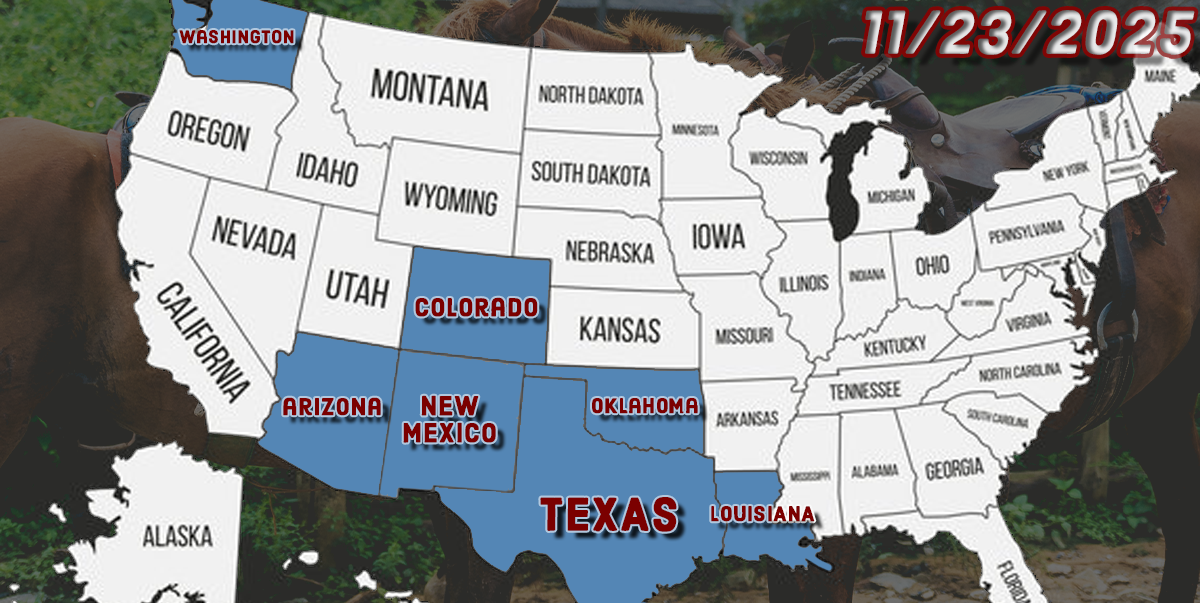
UPDATE: MURFREESBORO, TN - Middle Tennessee veterinarians are sounding the alarm after horses from the region attended events linked to an outbreak of Equine Herpesvirus-1 (EHV-1). The virus, which has already spread across multiple states, is highly contagious and can cause respiratory illness, late-term abortions in pregnant mares, and a dangerous neurological condition known as Equine Herpes Myeloencephalopathy (EHM). The current numbers reported late Sunday night show 6 EHV-1 cases in Arizona, Washington and Oklahoma (Some cases with NO clinical signs and some with NO neurological signs), and 21 EHM cases have been reported WITH neurological signs in Texas, Oklahoma, Louisiana, Colorado and New Mexico.

It appears that the initial source of the outbreak has been traced to the Women’s Professional Rodeo Association (WPRA) World Finals and the Elite Barrel Race, held in Waco, Texas. The event took place between November 5 and 9, 2025, and several equine news outlets have reported that horses attending these competitions have been identified as the originating source of the spread. After competing, multiple horses traveled to other states, unintentionally carrying the virus with them and contributing to its potential wider transmission. As a result, several horse-related events across the country have since been canceled out of an abundance of concern.
The Tennessee Department of Agriculture said in an online post: "We recommend Tennessee horses who were at the event quarantine at home and that owners monitor any potentially exposed horses for 21 days. EHV-1 can cause respiratory disease, abortion, and neurologic disease. Increase biosecurity measures and remain vigilant for neurologic signs and temperature spikes of 101.5 and above. Should these symptoms arise, work with a private veterinarian for care, and contact the State Veterinarian’s office at 615-837-5120." 21-Days after November 9, 2025 is November 30, 2025.
MORE: Some of the more distant but still relevant states with confirmed cases include both Colorado and New Mexico. As of late Sunday night (November 23, 2025), WGNS confirmed that there are no EHM or EHV-1 cases in the Volunteer State. We also verified that no cases have been reported in any neighboring states known for horse training and competitive equine events, such as Kentucky, Georgia, or Alabama.

A social media post from Tennessee Equine Hospital (Facebook - See Below) previously stated that, as of November 19, 2025, there were no confirmed positive EHV-1 cases in Tennessee. While Tennessee is considered at-risk — especially Middle Tennessee, due to the high number of show-horse farms — the topic remains important for both owners and veterinarians. However, there are no confirmed cases in the immediate region at this time, according to all available sources.
Below Map of 7 States With Confirmed EHM or EHV-1 Cases (Scroll Down to See Full Map):
Remain On-Alert: The Tennessee Department of Agriculture is monitoring the situation and has recommended heightened biosecurity for horses that may have been exposed.
Previously Reported:

Concerns Close to Home - With the Tennessee Miller Coliseum in Murfreesboro hosting frequent horse shows, veterinarians say the risk of exposure is real. Horses that traveled to or competed at events in Waco, Texas—where the outbreak was first identified—may have returned to Middle Tennessee and mingled with local animals. That possibility has prompted veterinarians to urge horse owners to be vigilant, monitor their animals closely, and avoid unnecessary travel or contact until the situation stabilizes.
How the Virus Spreads and Shows Up EHV-1 - has an incubation period of about 2 to 10 days, meaning horses exposed at recent events could already be carrying the virus without showing symptoms. Early signs include fever, nasal discharge, and coughing, but the disease can escalate quickly to neurological issues such as loss of coordination, weakness, and even inability to stand. Pregnant mares may abort late in gestation without warning.
Impact Beyond Horses - While EHV-1 is a serious threat to horses, it does not infect humans. People can, however, spread the virus indirectly by carrying it on clothing, boots, or equipment. Other equids—including donkeys, mules, and zebras—can contract EHV-1, but the virus does not affect dogs, cattle, or other farm animals.
What Horse Owners Should Do - Veterinarians recommend immediate isolation of any horse suspected of exposure. Owners should take twice-daily temperature readings, disinfect tack and equipment, and avoid sharing water sources. Horses showing fever or neurological symptoms should be quarantined for at least 21–28 days and evaluated by a veterinarian. While vaccines can reduce respiratory and reproductive illness, they do not prevent the neurological form of EHV-1, making biosecurity measures the most effective defense.
A Community on Guard - Local equine organizations and veterinarians stress that transparency and caution are key. Canceling or postponing large gatherings may be necessary to protect the broader horse community. As one veterinarian put it, “Every day matters when it comes to stopping EHV-1. The sooner we act, the more horses we save.”