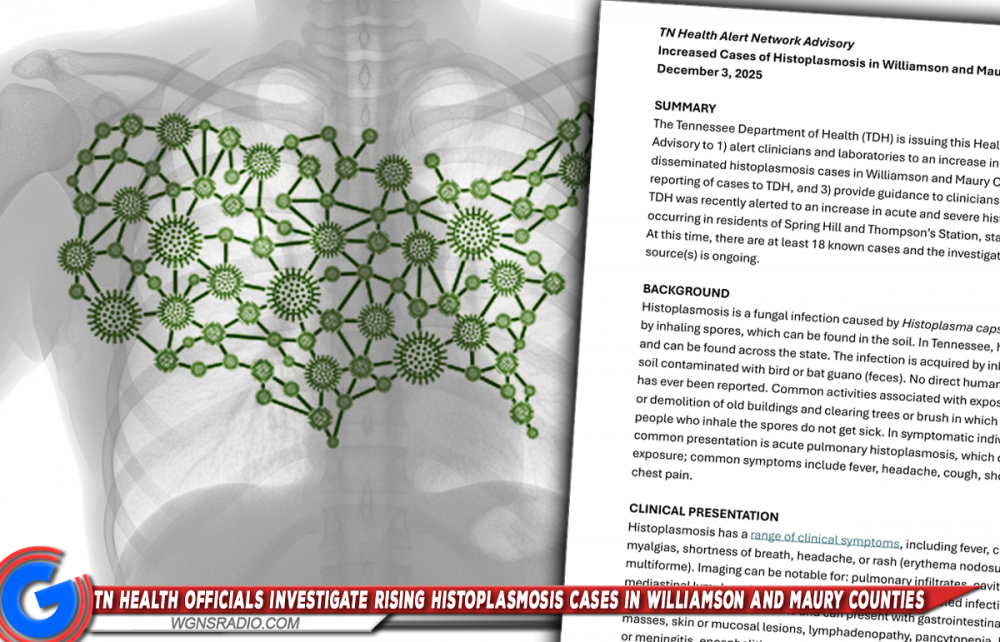

WILLIAMSON & MAURY COUNTIES, Tenn. — The Tennessee Department of Health (TDH) is alerting doctors, hospitals, and laboratories to a concerning increase in cases of histoplasmosis. Evidently, this increase has been recorded in Williamson and Maury counties, with at least 18 confirmed cases reported as of early December. The fungal illness has primarily affected residents of Spring Hill and Thompson’s Station, with the outbreak investigation still ongoing (See the recent information released by the Tennessee Department of Health HERE).
Histoplasmosis is caused by inhaling spores of the fungus Histoplasma capsulatum, which is found in soil contaminated with bird or bat droppings. While the infection is considered endemic to Tennessee, most people exposed never become ill. However, symptomatic cases can develop three to fourteen days after exposure and often include fever, cough, shortness of breath, chest pain, and headaches. More severe, disseminated infections are more common in people with weakened immune systems and can impact multiple organs.
Health officials state that common exposure activities include demolition or remodeling of old buildings, clearing brush, or disturbing soil where birds or bats have roosted. The infection is not spread person-to-person, but TDH is urging local healthcare providers to maintain a high level of suspicion for patients presenting with unexplained respiratory illness, especially those who live or work in the affected counties.
The Centers for Disease Control and Prevention recommends urine antigen testing for diagnosis, with additional blood testing possibly improving detection. The Tennessee State Public Health Laboratory can also perform fungal cultures, though results may take up to six weeks. Clinicians are required to report confirmed or suspected cases to TDH.
Residents experiencing persistent respiratory symptoms, fever, or severe fatigue are encouraged to seek medical attention. State health officials say early diagnosis and treatment are key to preventing serious complications.
Noteworthy: Across the country, not all states report histoplasmosis cases to the Centers for Disease Control and Prevention (CDC), which can lead to skewed data in some areas. Tennessee is among the states that are not required to submit histoplasmosis statistics to the CDC, nor does it report Coccidioidomycosis (Valley Fever) or Blastomycosis cases. However, the state does report Candida auris cases and any other Candida species isolated in blood to the CDC.