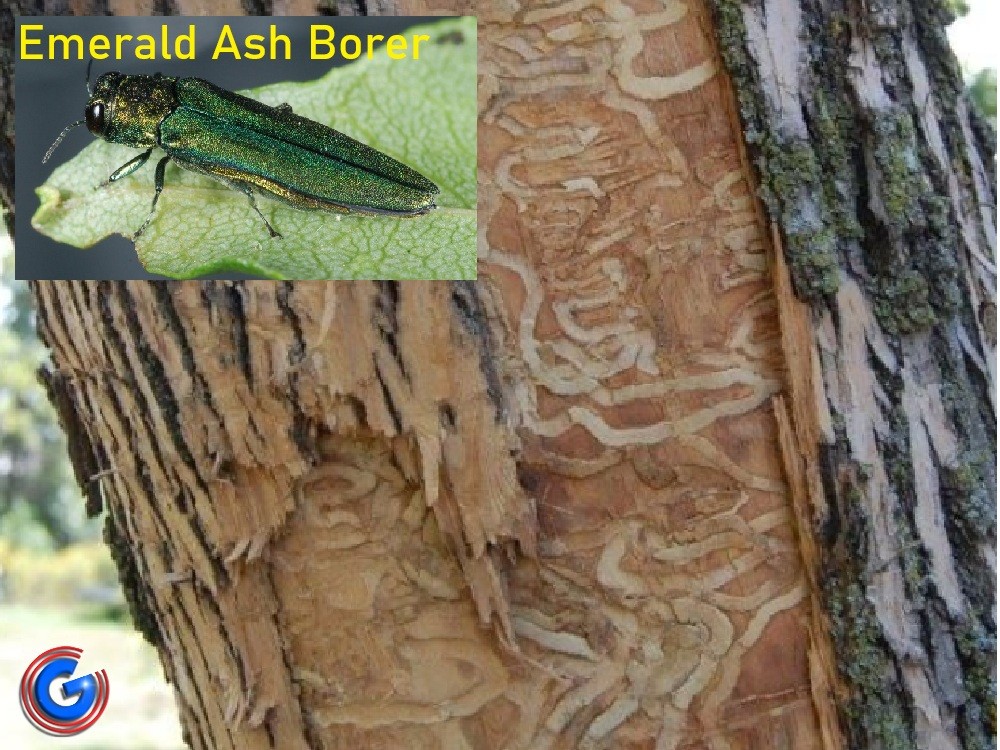

SPRINGFIELD, TN - The Tennessee Department of Agriculture has confirmed that the emerald ash borer has now reached Robertson County, marking yet another step in the insect’s steady march across the Volunteer State. For Rutherford County, this isn’t new territory. The beetle was confirmed here back in 2015, when the state expanded its quarantine after it was found in local traps. In other words, the pest has been chewing through our ash trees for nearly a decade.
Statewide reporting shows the beetle is now confirmed in 67 Tennessee counties, and Robertson County is simply the latest addition. The emerald ash borer, first discovered in the U.S. in 2002, has already killed tens of millions of ash trees nationwide. Tennessee first detected it in 2010, and since then it has continued to spread through both rural and urban areas.
The impact is devastating. All ash species are vulnerable, and once a tree is infested, it typically dies within two to five years. The beetle doesn’t move far on its own, but humans unintentionally help it along by transporting untreated firewood, nursery stock, or unprocessed logs.
The Division of Forestry is monitoring the situation and offering guidance to landowners, but slowing the spread depends heavily on early detection and responsible management. Homeowners can look for thinning canopies, bark splits, woodpecker activity, or the telltale D‑shaped exit holes on the trunk. Avoiding the movement of firewood is one of the simplest and most effective ways to help.
While treatments exist, they’re most effective when started early and may not be practical for large wooded areas. In many cases, consulting a certified arborist or local forester is the best first step.
By the way, this is not the insect that devestated forrests in the Great Smoky Mountains National Park. The widespread dead trees you see on ridgelines and high elevations in the Smokies — those ghost‑gray trunks sticking up like toothpicks — were caused by the Hemlock Woolly Adelgid (HWA), not the Emerald Ash Borer.