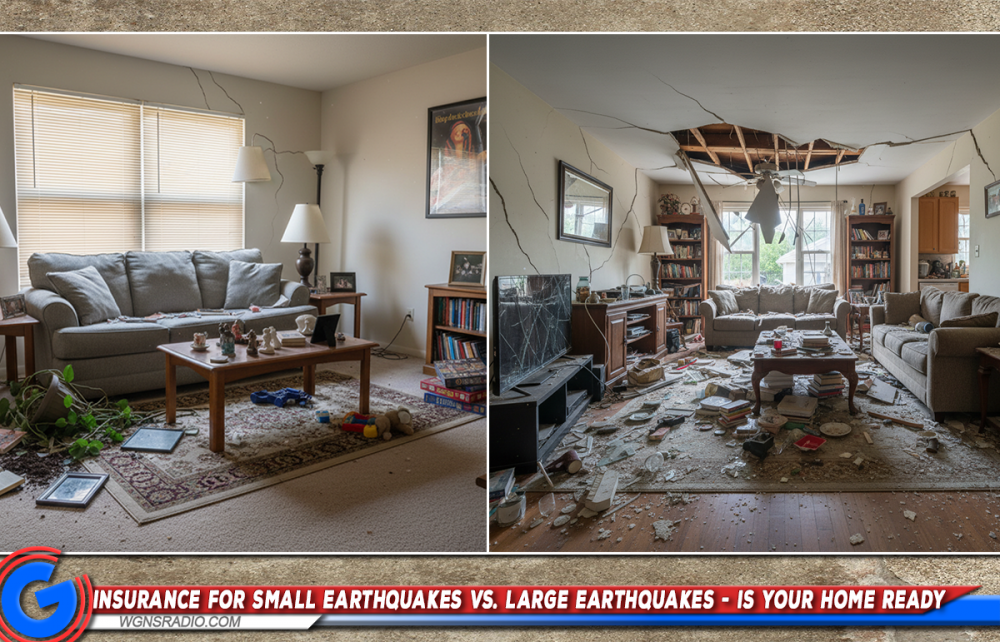
NASHVILLE, Tenn. — The Tennessee Department of Commerce & Insurance (TDCI) is encouraging residents across the state to evaluate their earthquake preparedness as February is recognized as Earthquake Awareness Month.

State officials say preparation is not only about knowing what to do during a quake — it also includes understanding the financial risks that follow.
“Preparedness is critical to your resilience after a natural disaster,” said TDCI Commissioner Carter Lawrence. “During Earthquake Awareness Month, I urge consumers to prepare for the potential financial impacts of earthquakes by learning more about earthquake insurance today and making sure that they have adequate insurance coverage in the event of an earthquake.”
Earthquake Risk in Tennessee - While Tennessee is not typically associated with major seismic activity like California, earthquakes occur daily across the central United States. Experts report nearly 2,000 small tremors each year in the region.
Tennessee is home to two primary seismic zones:
-
New Madrid Seismic Zone in West Tennessee
-
East Tennessee Seismic Zone in East Tennessee
Scientists estimate there is a 25% to 40% probability of a magnitude 6.0 or greater earthquake striking the central United States within the next 50 years. While the New Madrid Seismic Zone remains a primary focus, seismic activity also occurs in the Wabash Valley Seismic Zone and in states including Oklahoma, Kansas, Ohio, and Texas.

Approximately 200 earthquakes are recorded annually in the central U.S., though many are too small to be felt.
Insurance Coverage Gaps - TDCI officials stress that standard homeowners and business insurance policies do not cover earthquake damage. Separate earthquake insurance must be purchased through licensed insurance producers in Tennessee.
An earthquake insurance policy can help offset financial losses, but consumers are encouraged to understand policy details — especially deductibles.
Unlike traditional homeowners insurance, earthquake deductibles are typically calculated as a percentage of the home’s insured value. Most deductibles range from 10% to 20%. For example, a home insured for $200,000 with a 10% deductible would require the homeowner to pay $20,000 before coverage begins.
Some policies may include separate deductibles for:
-
The home’s structure
-
Personal belongings
-
Detached structures such as garages or fences
Consumers are advised to review policies carefully and consult their insurance agent to understand how coverage limits and deductibles apply.
What To Do During an Earthquake - State officials also emphasize physical preparedness. In the event of an earthquake, individuals may only have seconds to react before shaking intensifies.
Safety officials recommend practicing the “Drop, Cover, and Hold On” method:
-
Drop to the ground
-
Cover under a sturdy desk or table
-
Hold On until the shaking stops
If outdoors, move to a clear area away from buildings, trees, and power lines before dropping to the ground. Drivers should pull over to a safe location and remain in their vehicle with seatbelts fastened until shaking stops, then proceed cautiously — avoiding bridges and ramps that may be damaged.
Strengthening Your Home - Residents can reduce risk by securing heavy furniture such as bookcases, refrigerators, and televisions to walls. Heavy and breakable objects should be stored on low shelves. Structural improvements may also help prevent collapse in the event of a significant quake.
Officials encourage Tennesseans to identify safe areas inside their homes, offices, and schools before an earthquake occurs so they can react quickly if needed.
More information about earthquake insurance and disaster preparedness is available at tn.gov/insurance.