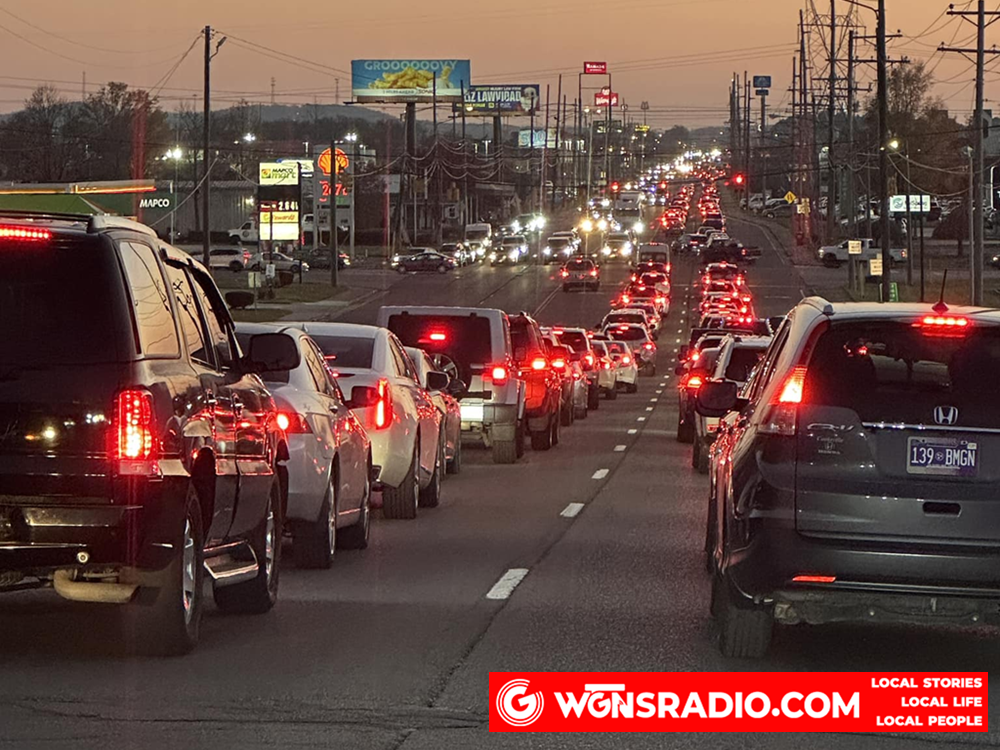

MURFREESBORO, TN (WGNS)- Murfreesboro residents don’t need a national study to tell them traffic is a problem—they live it every day. But two new statewide reports help explain why the issue feels so overwhelming here, even as local leaders work to make improvements. Murfreesboro is still the 16th fastest‑growing city in the nation among cities over 100,000, and that kind of growth simply outpaces the ability to widen roads, redesign intersections, or build safer corridors fast enough to keep up.
The first study paints a sobering picture for anyone who walks or bikes in Tennessee. The state now ranks #7 most dangerous in America for active commuters, with 44.5 pedestrian deaths per 10,000 commuters and 30.3 cyclist deaths per 10,000. Those numbers aren’t just high—they’re rising fast. Tennessee’s pedestrian fatality rate has surged 63% in the past decade, one of the largest increases in the country. When you combine both pedestrian and cyclist danger, Tennessee earns a 53.09 danger score, placing it squarely among the nation’s most hazardous states for people outside of cars.
The second study focuses on nighttime driving, and the results are even more alarming. Memphis now ranks as the deadliest city in America for nighttime fatal crashes, with 611 deaths between 8 p.m. and 6 a.m. from 2019 to 2023. That’s a rate of 20.11 deaths per 100,000 people—more than 11 times higher than New York City and more than double Nashville’s rate. And Nashville’s numbers matter deeply for Murfreesboro, because both cities share the same Metro Statistical Area (MSA), the same commuting patterns, and many of the same high‑speed corridors.
Local leaders say the takeaway is clear: traffic safety isn’t just a Murfreesboro problem—it’s a Tennessee problem, magnified in fast‑growing communities like ours. As population increases, so do conflict points, turning movements, speed differentials, and nighttime congestion. That’s why Murfreesboro’s busiest corridors—Old Fort Parkway, Memorial, Broad Street, Rutherford Boulevard, and the I‑24 gateway—show the same patterns seen in the statewide data.
The good news is that the strategies proven to reduce fatal crashes are already being discussed locally: redesigning dangerous arterials, improving lighting, managing speeds, targeting enforcement, and building safer options for walkers and cyclists. The challenge is doing it fast enough to keep pace with a city that continues to grow at record speed.
Stay tuned to WGNS (FM 101.9, FM 100.5, AM 1450, http://wgnsradio.com) as our daily talk shows focus on "traffic issues" with Murfreesboro Mayor Shane McFarland, Rutherford County Mayor Joe Carr, and Murfreesboro Police Chief Michael Bowen.