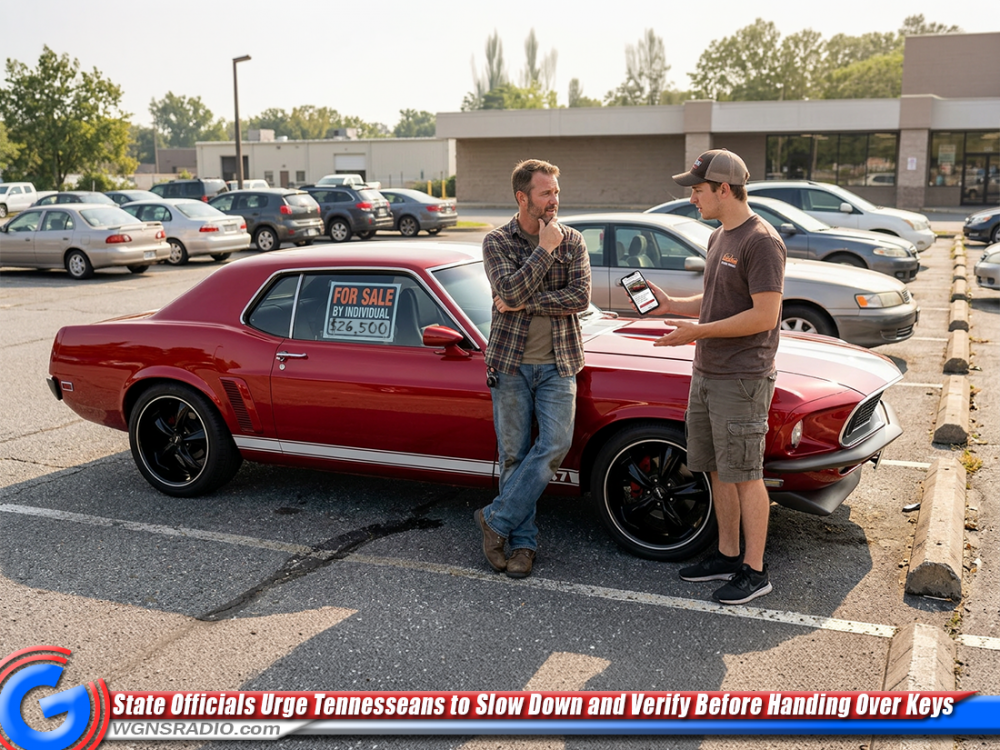

NASHVILLE, TN (WGNS) - A growing wave of vehicle‑sale scams is hitting Middle Tennessee, and state officials say the pattern is costing unsuspecting sellers their cars, their money and their peace of mind. The Tennessee Department of Commerce & Insurance (TDCI) is warning consumers about a sharp uptick in fraud tied to Facebook Marketplace, where scammers pose as legitimate buyers, offer convincing payment methods and then vanish with the vehicle.
The setup is deceptively simple. A seller lists a car online and is quickly contacted by someone eager to buy. A price is agreed on, and in some cases the scammer even speaks with the seller’s bank to make the deal feel legitimate. Then comes the “payment”—a cashier’s check that looks official or a wire transfer that appears to have gone through. One Tennessee seller even had a bank contacted directly, only to later learn the check was fake.
Believing the transaction is complete, the seller hands over the keys. Days later, the truth surfaces: the check bounces or the wire transfer is reversed. By then, the buyer is long gone, and the seller is left without the vehicle or the money. To make matters worse, most auto insurance policies won’t cover theft when the owner voluntarily gives someone the keys.
“Most auto insurance policies have an anti‑fraud provision that makes the auto owner ineligible for theft coverage if someone willingly gives their keys to another individual,” said TDCI Commissioner Carter Lawrence. He encourages consumers to read their policies closely so they understand what is—and isn’t—covered.
TDCI is sharing the warning with the Tennessee Motor Vehicle Commission, the Department of Revenue, the Attorney General’s Consumer Affairs Division and the Department of Financial Institutions as reports continue to rise.
Officials say the best defense is time and verification. Sellers should call the issuing bank to confirm a cashier’s check is real or meet the buyer at their bank so the check can be issued and verified on the spot. Wire transfers require even more caution, and sellers are urged to wait two business days to ensure funds have fully cleared before releasing a vehicle.
Other scams are circulating too, including VIN swapping, fraudulent titles, odometer rollbacks, overdue rental cars being sold to unsuspecting buyers and salvage vehicles passed off as clean‑title cars. In every case, scammers rely on rushed decisions and trusting sellers.