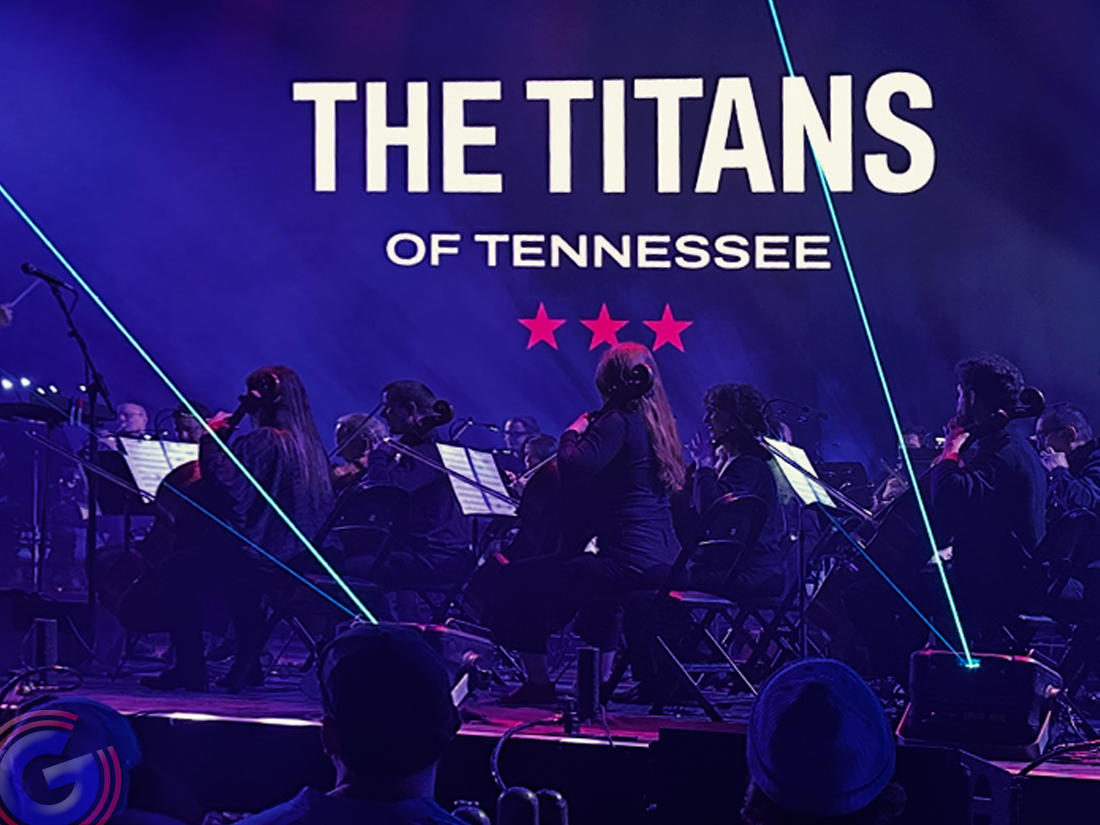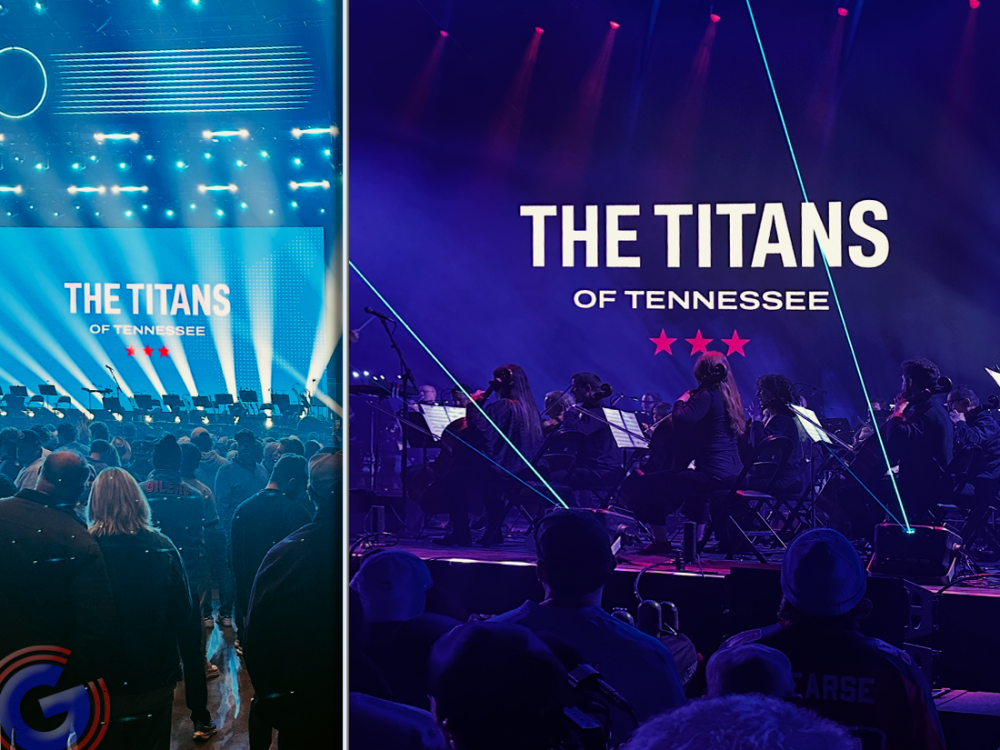

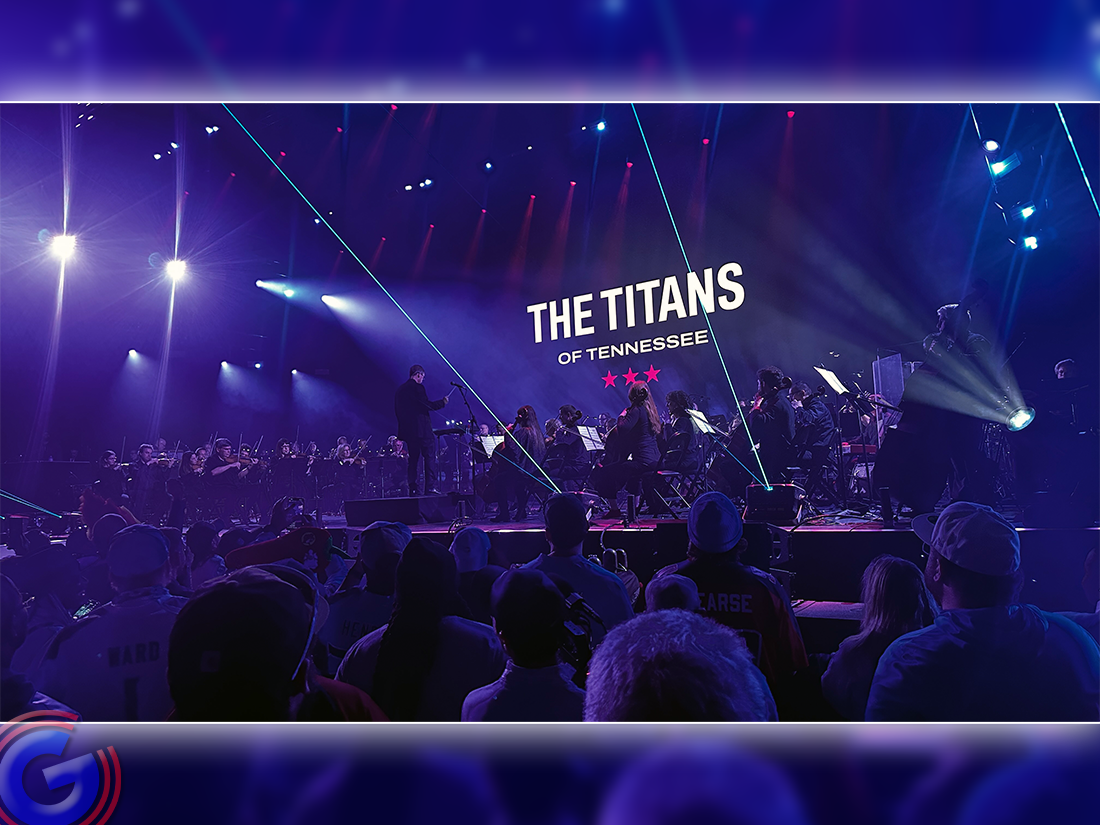
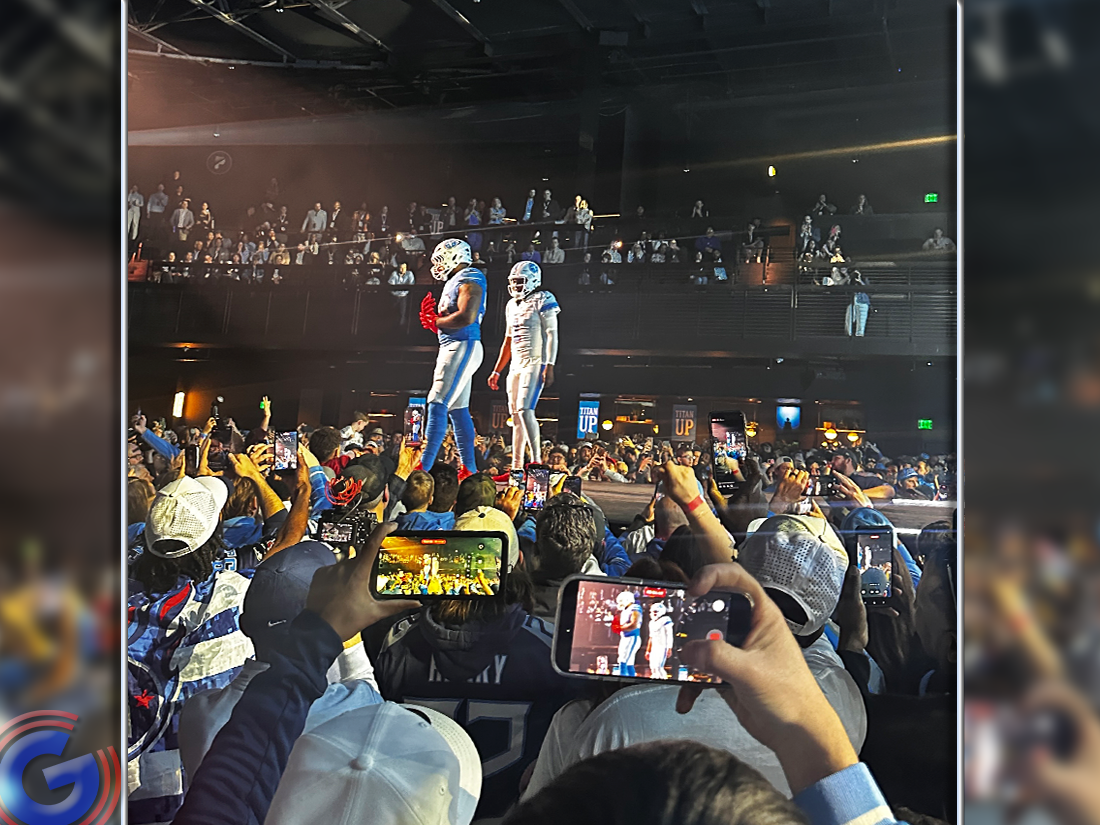
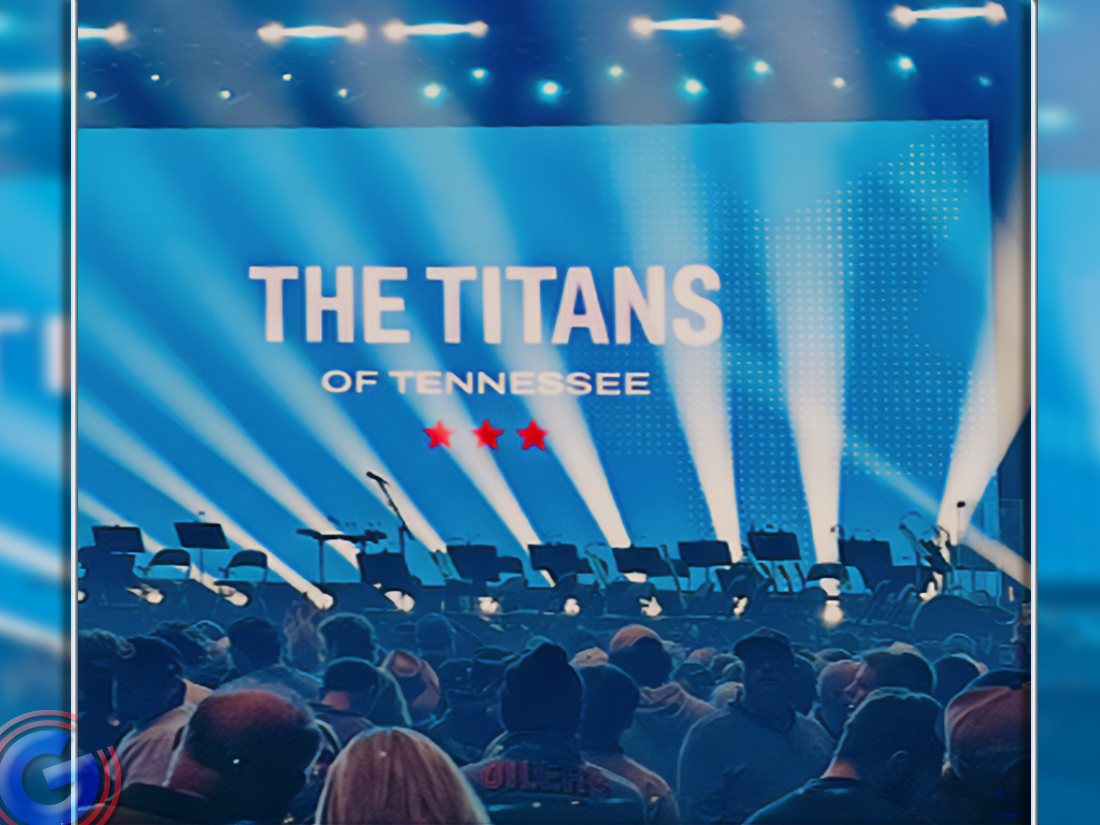
NASHVILLE, TN (WGNS) — The Tennessee Titans turned Thursday night (March 12, 2026) into a full-scale celebration of what lies ahead, unveiling a complete franchise rebrand in front of 2,500 fans at The Pinnacle in downtown Nashville. It marked the team’s most dramatic identity shift in years, giving supporters their first look at new logos, new uniforms, and a refreshed direction shaped heavily by Tennesseans themselves.
At the center of the makeover is “The Shield,” the new primary logo featuring Titans blue, red, and white wrapped around the familiar Tennessee Tri-Star. A secondary mark, “The Football,” blends the letters T and N in a vertical layout that nods to both Nashville and the state the team represents. Together, the marks tie the franchise’s past to its present, honoring the “Luv Ya Blue” era while embracing nearly three decades of Tennessee football.
Team President and CEO Burke Nihill said the goal was to merge the strongest pieces of the franchise’s identity into something that feels both familiar and forward-looking.
“We wanted to take the best parts of all of that and bring it together in a way that makes sense,” Nihill said. “I feel like we’re building on the legacy of what got us here, and we’re doing it in a way that is going to set the course of this organization for decades to come.”
Nihill has led business operations for the Tennessee Titans and helped shape the organization’s strategic direction since 2020. He previously oversaw the 2019 NFL Draft in Nashville and the renovation of the team’s training facility located across from the former Fountain Square shopping complex, a high-end retail and boutique destination that opened in 1987 (scroll down for fun facts about Fountain Square). Nihill also introduced the franchise’s “Win, Serve, Entertain” mission statement.
The uniforms lean heavily into Titans blue, a color fans and players overwhelmingly favored in surveys and focus groups. The primary home look will feature Titans blue jerseys with white pants, while the road set will feature white jerseys with either white or blue pants. “TITANS” is stitched across the chest of the home jerseys, while “TENNESSEE” appears on the road uniforms, reinforcing the team’s statewide identity.

Numbers return to a classic collegiate style, with white digits outlined in red on the blue jerseys and blue digits outlined in red on the white jerseys. The familiar stripe has been reimagined as the “6-String Stripe,” a nod to Nashville’s musical roots, running along the pants, sleeves, and helmet. Three navy stars tucked under the arms and at the neckline represent Tennessee’s three Grand Divisions, while a “WE” collar tab inside each jersey reinforces the team’s “We Over Me” mentality.
The redesigned white helmet features The Shield logo on each side, a white facemask, and the new multi-color stripe. Nihill described the logo as an evolution rather than a departure.
“There’s a clear familiarity, and we wanted that,” Nihill said. “This brings everything together in a way that feels like it will stand the test of time.”
The rebrand arrives as the Titans navigate major organizational changes—from a new coaching staff to a reshaped roster and, soon, a new stadium. Team officials say the updated look reflects both where the franchise has been and where it is headed.
Fountain Square, which reportedly cost $25 million to build according to press releases sent to media outlets when it opened in 1987, was comprised of retail and restaurant space totaling 175,000 square feet. During its grand opening, the aging musical talent of At one point, The Beach Boys performing on a Fountain Square stage helped welcome shoppers to a mix of high-end clothing stores and quaint—but expensive—boutiques. However, the retail center did not keep its doors open long enough to determine if it had lasting potential, closing just three years later in 1990. Little did the operators know that seven years later an NFL franchise would call the Volunteer State home. Of course, their crystal ball also failed to reveal that the team’s owners would decide not only to permanently locate in Nashville, but also to open their training facility directly behind—or across from—what used to be Fountain Square.
Some of the restaurant and clothing stores that firts opened at Fountain Square in 1987 included the Heartthrob Cafe, Hooters, Fat Tuesday’s, Waldenbooks, Benetton, Banana Republic, and more.
Fountain Square also featured a massive 14-screen movie theater operated by AMC Cinemas, which continued operations nine years after the so-called “dead mall” closed due to a lack of foot traffic.
With the theater still in operation, the owners of the shopping complex attempted a brief revamp and launched a reopening in 1995. Changing the name of Fountain Square to “The Waterfront” was not enough to breathe lasting life into the project. Due to a lack of interest from retailers, the complex once again found its doors locked to the outside world.
Today, a $25 million retail venture would be far more costly to build and would rise well above the $142.85 per square foot construction cost from 39 years ago. Modern high-end retail shopping centers typically cost between $500 and $800 per square foot to construct. Those figures indicate the cost to build Fountain Square today would likely fall somewhere between $87.5 million and $140 million.
The AMC movie theater at Fountain Square later became office space, which also failed to attract tenants and was eventually converted into Watkins College of Art & Design. However, that venture also proved short-lived, and the building was demolished five years ago in 2021.
The Houston Oilers relocated to Tennessee in 1997, though the team did not play its first game in Nashville until 1998. During their first season in the state, home games were played in Memphis. Fans who attended those games may recall watching from the seats of the Liberty Bowl, located near the University of Memphis campus. One year later, the team moved to Music City, playing its first Nashville season at Vanderbilt Stadium in 1998. In 1999, the franchise was officially rebranded as the Tennessee Titans, as Nashville became the team’s permanent home.