
MURFREESBORO, TN (WGNS) - Murfreesboro may be one of the fastest‑growing cities in America — 16th in the nation among cities with more than 100,000 people — but some things here never change. Chief among them is our famously unpredictable weather. New residents often look around in disbelief when we swing from snow and ice to short‑sleeve sunshine in a matter of hours. But for those of us who grew up here, the old Tennessee saying still holds up: if you don’t like the weather today, just wait a day.
We saw it just a month ago when Middle Tennessee woke up to frozen roads and single‑digit wind chills, only to enjoy temperatures in the 60s the very next afternoon. And now that spring officially arrived last Friday, March 20, we’re right back on the roller coaster — 80 degrees one day, a brisk 47 the next.
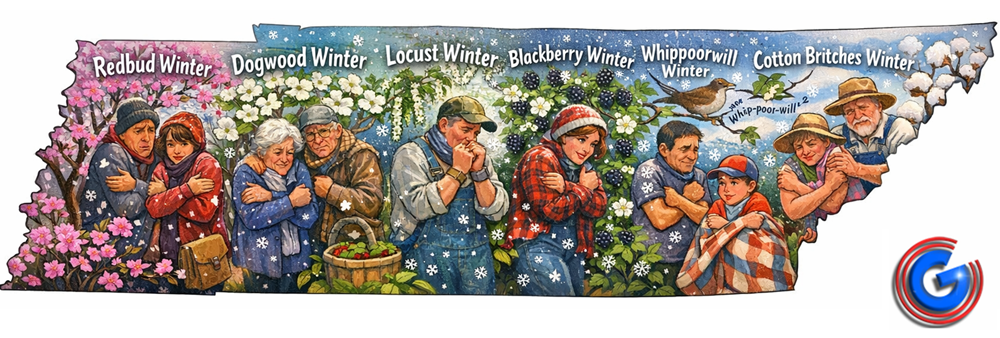
So for all the new Tennessee transplants trying to make sense of it, WGNS is offering a little cultural orientation. Around here, we don’t just have spring. We have six “little winters,” each tied to what’s blooming outside your window. Print this out, keep it handy, and before long your neighbors will swear you’re a native.
Tennessee's "Six Winters" During SPRING:
- Redbud Winter, usually in March, when those bright pink trees pop and a chilly snap follows.
- Dogwood Winter arrives in late March or April, sometimes more than once, just to keep everyone guessing.
- Locust Winter shows up in late April or early May, the moment you think warm weather is here to stay.
- Blackberry Winter, the most famous of the bunch, hits in mid to late May and is often the last real cool spell before summer heat settles in.
- Whippoorwill Winter, also called Britches Winter, brings a subtle late‑May cool‑down that makes you reach for a light jacket.
- Cotton Britches Winter drifts in as spring fades toward early summer.
Volunteer State
While we’re talking Tennessee traditions, here’s another one newcomers often ask about: why we’re called the Volunteer State. Spoiler — it has nothing to do with UT football. The nickname dates back to 1813, when Governor Willie Blount asked for 3,500 militia volunteers and nearly 28,000 Tennesseans stepped forward. The reputation grew during the Mexican–American War, when more than 30,000 volunteered for just 2,600 requested positions. And the spirit of service didn’t stop there. From the frontier days of John Sevier to modern National Guard units, Tennesseans have always shown up when needed.
You’ll see that same spirit right here in Rutherford County. When a need arises, people turn out — with time, with money, with heart. It’s part of what makes this place feel like home, no matter where you came from.

And that’s why your Good Neighbor Station — that’s what WGNS stands for — is here to help you settle in, understand the quirks, and feel like a true Tennessean, weather whiplash and all.