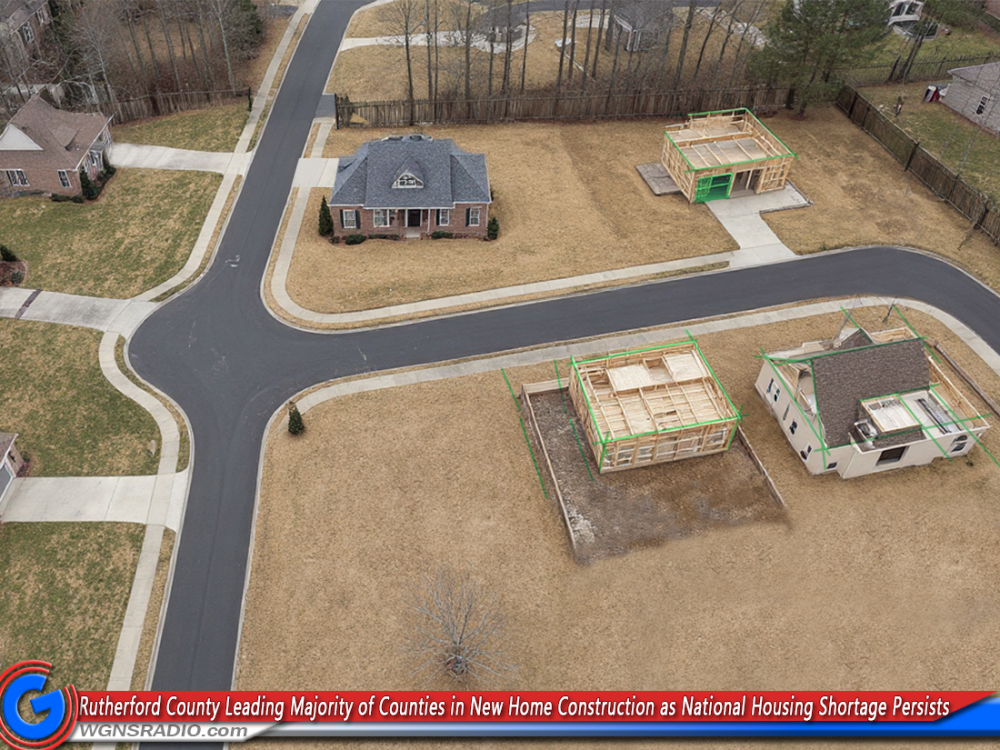

RUTHERFORD COUNTY, TN - A new study released by Construction Coverage is shedding light on a widening gap between housing trends in Tennessee and across the United States, as affordability challenges and limited construction continue to shape the market. Nationwide, home prices have surged more than 23% since early 2020, while mortgage rates remain at levels not seen since before the Great Recession. Combined with inflation and rising rents, these conditions have made it increasingly difficult for prospective buyers to enter the housing market, especially as the country faces an estimated housing shortage of between 1.5 and 7.3 million units.
That shortage has contributed to an aging housing stock across the U.S., where the median home age has climbed to 43 years. Older homes, while often more affordable upfront, frequently come with higher maintenance costs and a greater likelihood of structural issues. In contrast, rapidly growing regions in the Sun Belt—including Tennessee—are seeing newer housing inventories due to sustained development and population growth.
Nowhere is that trend more evident than in the Nashville-Davidson--Murfreesboro--Franklin, TN Metro Statistical Area, where the median home age is just 28 years, significantly younger than the national average. Nearly 28.4% of homes in the region were built after 2010—more than double the U.S. rate—while only 4.4% date back to before 1940. These figures highlight the region’s rapid expansion and its ability to add new housing supply at a pace many other parts of the country have struggled to match.
The growth seen across Middle Tennessee is closely tied to long-term population trends, particularly in Rutherford County. Historical data shows that while early growth in the county was modest, significant expansion began in the mid-20th century and accelerated dramatically in the 1980s following the construction of the Nissan manufacturing plant in Smyrna. Since then, population increases have driven a surge in new housing construction locally, resulting in a housing stock that is largely newer compared to older, more established regions.
In recent years, that growth has only intensified. Rutherford County’s population reached 341,486 in 2020 and is estimated to have climbed to more than 386,000 by 2025. Current estimates place the population near 398,000, with projections indicating the county could surpass 400,000 residents within the next year and exceed 500,000 in the coming decade. This sustained population increase continues to fuel demand for new housing and infrastructure.
Within the Murfreesboro city limits, development trends show a mix of short-term fluctuations and long-term growth. While Building and Codes Department revenues reflect recent declines compared to prior fiscal years, new dwelling permits in January 2026 rose 8% compared to the previous year and are up 40% overall, largely due to the approval of a major apartment complex. Total permits remain slightly below last year’s levels but show signs of stabilization after sharper declines in late 2025.
Supporting that growth is the City’s impact fee program, which helps fund infrastructure tied directly to new development. In January 2026 alone, Murfreesboro assessed approximately $190,506 in impact fees, primarily from single-family residential construction. Fiscal year-to-date collections have reached about $3.17 million, with total revenues to date nearing $7.9 million. Those funds are being allocated to critical needs, including roads, parks, public safety, and schools.

After accounting for $1.37 million in expenditures, the City maintains a balance of roughly $6.53 million in impact fee funds, underscoring the scale of ongoing development. Officials note that the impact fee is a one-time charge assessed on new residential, commercial, and industrial construction, calculated based on the type and size of each project to ensure that growth helps pay for the infrastructure it requires.
Statewide, Tennessee mirrors other fast-growing Sun Belt states like Nevada and Arizona, which also report some of the youngest housing stocks in the country. Meanwhile, states in the Northeast and Midwest—such as New York, where the median home age reaches 65 years—continue to face challenges tied to older housing and limited new construction. These regional differences highlight how population growth and development patterns directly influence housing age and availability.
As demand continues to rise in Middle Tennessee, the challenge moving forward will be balancing rapid growth with affordability. While newer homes can reduce maintenance costs for buyers, strong demand in areas like Murfreesboro and the surrounding metro region continues to drive prices upward—leaving local leaders and developers working to ensure that housing supply keeps pace with one of the fastest-growing regions in the country.