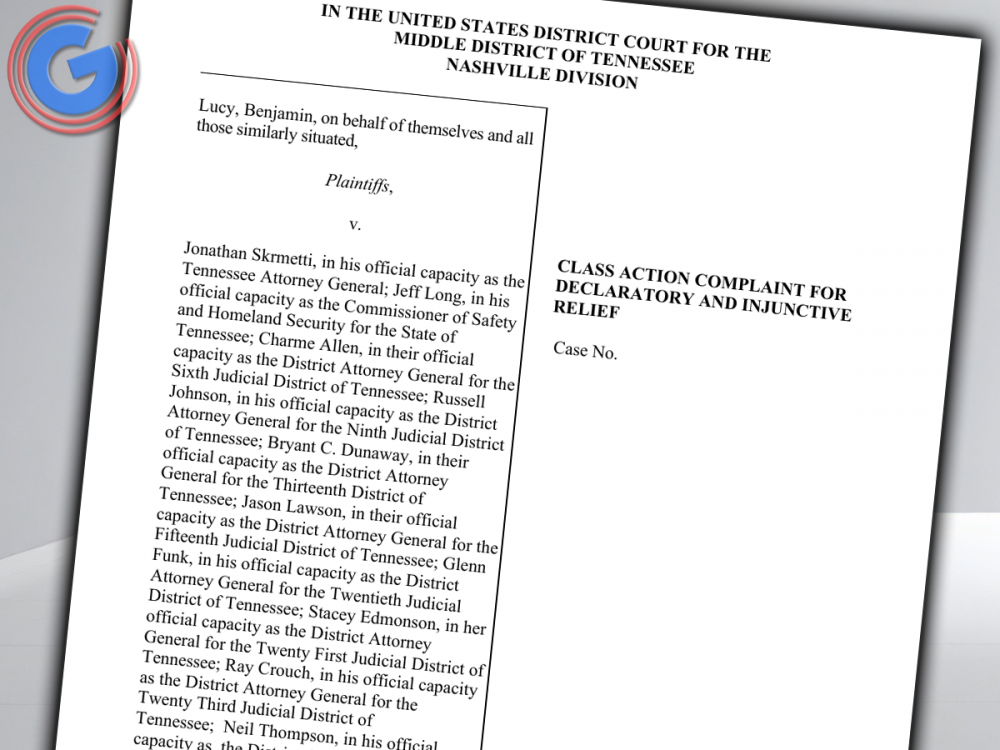
TENNESSEE - A newly filed federal lawsuit is challenging a Tennessee immigration law that plaintiffs argue unlawfully allows the state to create and enforce its own removal-related criminal penalties independent of federal authority (Read lawsuit here). The ACLU of Tennessee released, "Tennessee’s law, however, creates a new crime for people with final removal orders who have not left the state. HB 1704 is part of a larger framework of new extreme anti-immigration state laws aimed at criminalizing noncitizens’ presence within a state either by punishing entry, or in this case, lack of departure."

The class action complaint, filed Thursday in the U.S. District Court for the Middle District of Tennessee in Nashville, targets Section 1 of House Bill 1704, legislation signed into law earlier this year by Governor Bill Lee. The lawsuit names Tennessee Attorney General Jonathan Skrmetti, multiple district attorneys general across the state, and Tennessee Department of Safety and Homeland Security Commissioner Jeff Long among the defendants.
According to the filing, the challenged statute would make it a Class A misdemeanor for certain noncitizens with final federal removal orders to intentionally remain in Tennessee beyond a specified period. Plaintiffs contend the measure improperly grants Tennessee law enforcement agencies authority traditionally reserved for the federal government.
Court documents argue immigration enforcement and deportation procedures fall exclusively under federal jurisdiction through the Immigration and Nationality Act and related constitutional protections. Attorneys representing the plaintiffs maintain the state legislation violates the Supremacy Clause of the United States Constitution by attempting to establish a parallel immigration enforcement framework.
The complaint was brought on behalf of two plaintiffs identified as “Lucy” and “Benjamin,” along with others described as similarly situated individuals. Both plaintiffs currently reside in Memphis and allege they could face arrest, detention, or prosecution under the new statute because they possess final removal orders while continuing to live in Tennessee. One plaintiff reportedly has lived in the state for approximately 25 years and financially supports a son who is a United States citizen. The second plaintiff is enrolled in a long-term educational training program extending into 2027.
Legal filings further state that federal immigration law already contains detailed procedures governing deportation orders, appeals, humanitarian protections, and prosecutorial discretion. Attorneys challenging the legislation assert Congress has established an extensive national system that states cannot independently duplicate or override.
The lawsuit specifically requests declaratory and injunctive relief, asking the court to block enforcement of Section 1 before its scheduled July 1, 2026 effective date. Plaintiffs are also seeking certification as a class action representing other noncitizens who could potentially be subjected to the law statewide.
House Bill 1704 additionally contains a separate provision criminalizing reentry into Tennessee by certain previously removed individuals, though the filing notes that section would not become enforceable unless future federal action or a United States Supreme Court ruling alters current immigration preemption standards established in Arizona v. United States.

Attorneys representing the plaintiffs include lawyers affiliated with the American Civil Liberties Union Foundation Immigrants’ Rights Project, the ACLU of Tennessee, and the National Immigration Law Center.
No ruling has yet been issued in the matter, and the claims outlined in the lawsuit remain allegations subject to judicial review.
MORE DETAILS (Summary of the New Bill): Starting July 1, 2026, Tennessee law will make it a crime for adults with a final deportation or removal order to intentionally stay in the state more than 90 days after that order becomes final. The offense would be a Class A misdemeanor, carrying penalties of up to nearly one year in jail, a fine up to $2,500, or both. However, criminal proceedings must be paused if the person is still using legal options under federal law to challenge the removal order.
The bill also creates a separate offense for certain people who were previously deported or removed from the United States and then intentionally enter or try to enter Tennessee again. That part of the law would only take effect if the U.S. Supreme Court or Congress changes current federal immigration rules to allow states to enforce those types of immigration laws themselves.
An amendment approved by the Tennessee House clarified that the law only applies to people who are 18 years old or older.