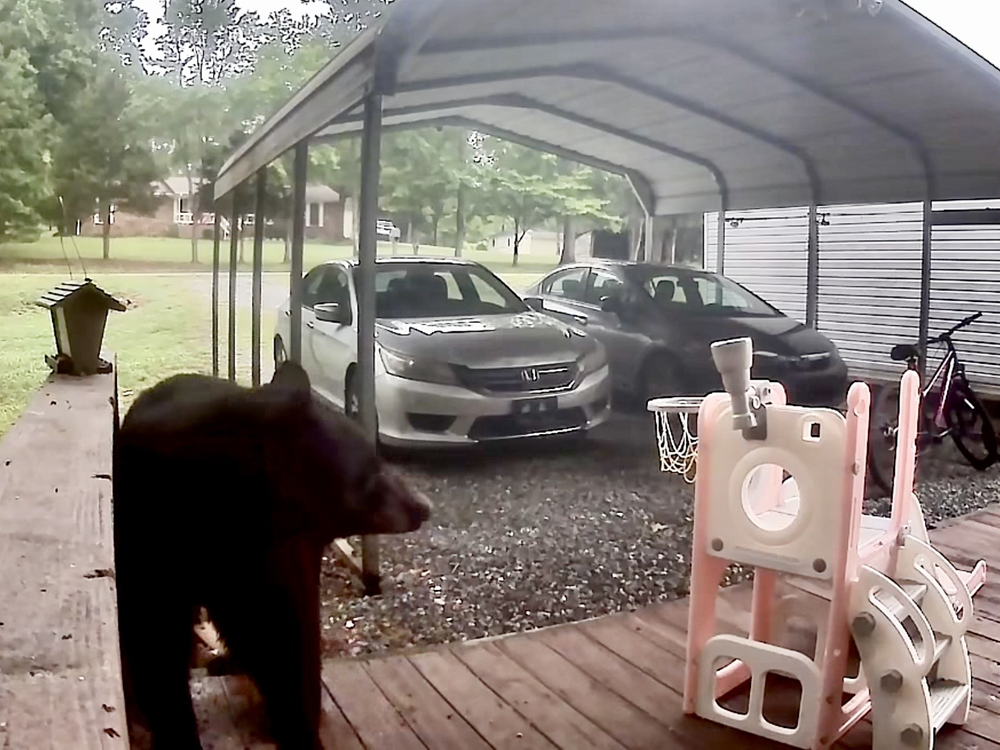
RUTHERFORD COUNTY, TN (WGNS) - Middle Tennessee isn’t imagining things — black bears are showing up in places where folks haven’t seen them in generations. All around sightings are dramatically rising in Rutherford County, neighbors in Wilson, Cannon, Coffee, and Bedford counties too. The Tennessee Wildlife Resources Agency (TWRA) says this trend isn’t a fluke. It’s the natural expansion of a healthy, growing bear population reclaiming its historic range.

So, the big question floating around Rutherford County right now is simple: Are bears dangerous?
The Tennessee Wildlife Resources Agency says black bears do not view humans as prey. They’re shy, smart, and wired to avoid people. The danger doesn’t come from the bear itself. It comes from what the bear finds.
If a bear wanders through a neighborhood and keeps moving, that’s normal. TWRA stresses that a passing bear is not an emergency. But if that same bear finds a buffet of unsecured garbage, birdseed, pet food, or a cooler left out on a campsite, the situation changes. A fed bear becomes a bold bear, and a bold bear becomes a dangerous bear.
That’s why wildlife officers keep repeating the same message: human behavior determines bear behavior.
The rise in sightings has a few clear causes. Tennessee’s black bear population — now nearing 6,000 — has rebounded after decades of conservation work. As East Tennessee and the Cumberland Plateau fill up, young male bears roam widely in spring and early summer, sometimes covering more than 300 square miles looking for new territory. Add Middle Tennessee’s rapid development and easy access to human food, and you get more bears showing up in places they once lived naturally.
TWRA fielded 1,700 bear‑related emergency calls last year, and a quarter of them were tied to garbage. That statistic alone tells the story: the problem isn’t the presence of bears — it’s the presence of food.
For campers and hikers, the same rules long used in the Smokies now apply here: store food properly, keep campsites clean, and never leave coolers or trash out. Do that, and bears remain skittish, avoidant, and non‑aggressive.

So, should Rutherford County residents be worried? Not really. Concerned? No. Prepared? Yes. Bears are becoming part of the Middle Tennessee landscape again, and coexistence is the new normal. As TWRA puts it, a bear passing through is not a threat. Finding food for a bear is a problem.
Black bears aren’t out there hunting pets the way coyotes do — that’s not their instinct and it’s not their diet. But a small dog or cat that rushes toward a bear, barks at it, or startles it can trigger a defensive reaction. In that moment, the bear isn’t thinking “meal.” It’s thinking “threat.” And when pets are left outside with food bowls, scraps, or strong smells, it’s the food that draws a bear in, not the pet itself.
The real risks come when pets get between a bear and a food source, when they approach or surprise a bear, or when they’re left unattended while a bear is already nearby. As a rule, black bears aren’t predators of domestic animals — they’re opportunists looking for calories, not conflict.
And that leads to the simplest truth of all: when we secure our food and clean up our yards, we protect our pets, our neighborhoods, and the bears themselves.